The bumper is Georgetown’s sacrificial panel
Ask around town and everyone’s bumper has a story. Winter mornings in Delrex and the Gellert streets start with a plow windrow across the driveway mouth, and a front lip that meets frozen snowbank at an angle comes away scraped or cracked. Main Street’s tight parking trades corner scuffs all year, the Marketplace’s concrete parking blocks catch low front covers as drivers pull through, and the Trafalgar-to-401 commute contributes the classic low-speed tap in the outlet-interchange queue. On the rural lines, washboard gravel and the odd reversing mishap at a farm gate round out the list.
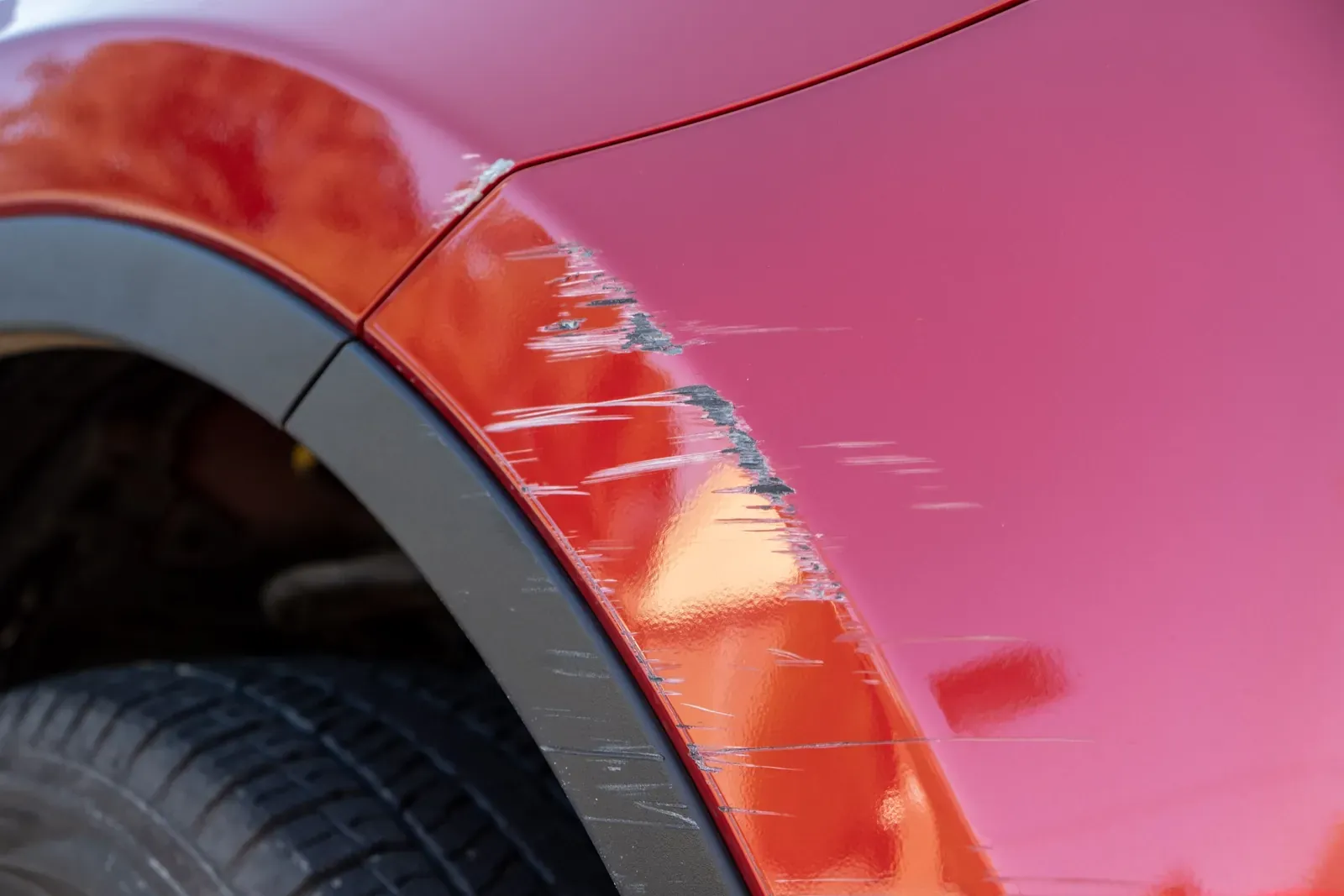
Modern bumpers make “it’s just a scuff” an unreliable diagnosis. Behind the flexible cover sit a foam or crushable absorber, a metal reinforcement bar, mounting brackets, and — on most vehicles built in the last decade — parking sensors and sometimes radar for the driver-assist systems. A cover can flex on impact, spring back looking merely scuffed, and hide a cracked bracket or a crushed absorber that will not protect you properly in the next hit. The cover tells you where the impact happened, not what it did.
Repair the cover or replace it — how we decide
The decision is made with the bumper off the car, and it follows the material. Scuffs and shallow scrapes in the paint refinish beautifully. A split in flexible cover plastic can often be repaired properly — bonded from behind, refinished in front — when it sits away from mounting points and sensor bores. Tears through mounting tabs, crushed corners, or damage around sensor housings usually mean the cover is done, because a repaired tab will not hold torque and a distorted sensor bore aims the sensor wrong. Whatever we find gets photographed and priced in writing before work continues.
Behind the cover, absorbers and reinforcements that took a hit get replaced, not straightened — they are single-use crash parts by design, and we ask your insurance company for OEM there. Sensors that were disturbed are checked and, where the manufacturer requires it, recalibrated so the systems behind them work as intended. The refinish is colour-matched and blended, and both the paint and the parts-and-installation work carry our warranties.
- Cover off before the final number — absorbers and brackets inspected
- Repairable splits bonded and refinished; torn mounts mean replacement
- Sensors checked and recalibrated where the manufacturer requires
- OEM parts preference, lifetime warranty on the refinish
Paying for it without overpaying
Bumper damage sits at every price point, so the payment question deserves a straight answer. A light scuff usually lands near or below a deductible — under the line where filing makes sense, quoted from your photos, no claim opened. A cracked cover with a dead sensor is a bigger number, and if another driver caused it, DCPD sends the claim through your own insurance company at no fault to you. A hit-and-run in a parking lot runs through your policy; photograph the scene and any paint transfer before you leave it. We will read the photos and tell you which lane your damage is in before you decide anything.
From Georgetown, the trip only happens once. Estimate by text to (647) 594-3401, the cover or parts ordered before your drop-off, the rental through your coverage booked to your arrival if the job needs one — then Trafalgar to the 401, east to Keele, and we are just south of Sheppard. Most bumper jobs are short stays. Hours run Monday to Saturday, 8 AM to 7 PM, with Sunday hand-offs by appointment.