Where Georgetown collisions actually happen
Very few of them happen downtown. The morning commute funnels the town onto Trafalgar Road, and Trafalgar is a two-lane road carrying highway habits — through traffic at 90 km/h passing left-turners waiting for a gap at 10 Side Road or Steeles, with the outlet-mall interchange stacking cars back from the 401 ramps on any busy weekend. The rear-end taps and the T-bone corner hits both come from that mix. Once the commute joins the 401 east, the stop-and-go through Milton and Mississauga manufactures the classic multi-car chain: a moment’s glance down, and a bumper that looks scuffed at the roadside turns out to be hiding a crushed absorber and a shifted rear panel.
The other Georgetown file is slower and closer to home. Highway 7 through Norval compresses two towns’ worth of traffic into a village main street, and creeping bumper-to-bumper columns trade paint constantly. Glen Williams adds tight-valley scrapes, and the winter sideroads north of 15 Side Road add the slide that ends against a culvert or a fence post. We see each of these often enough that when a Georgetown driver describes the crash, we can usually name the road before they do.
Teardown first, then a number you can trust
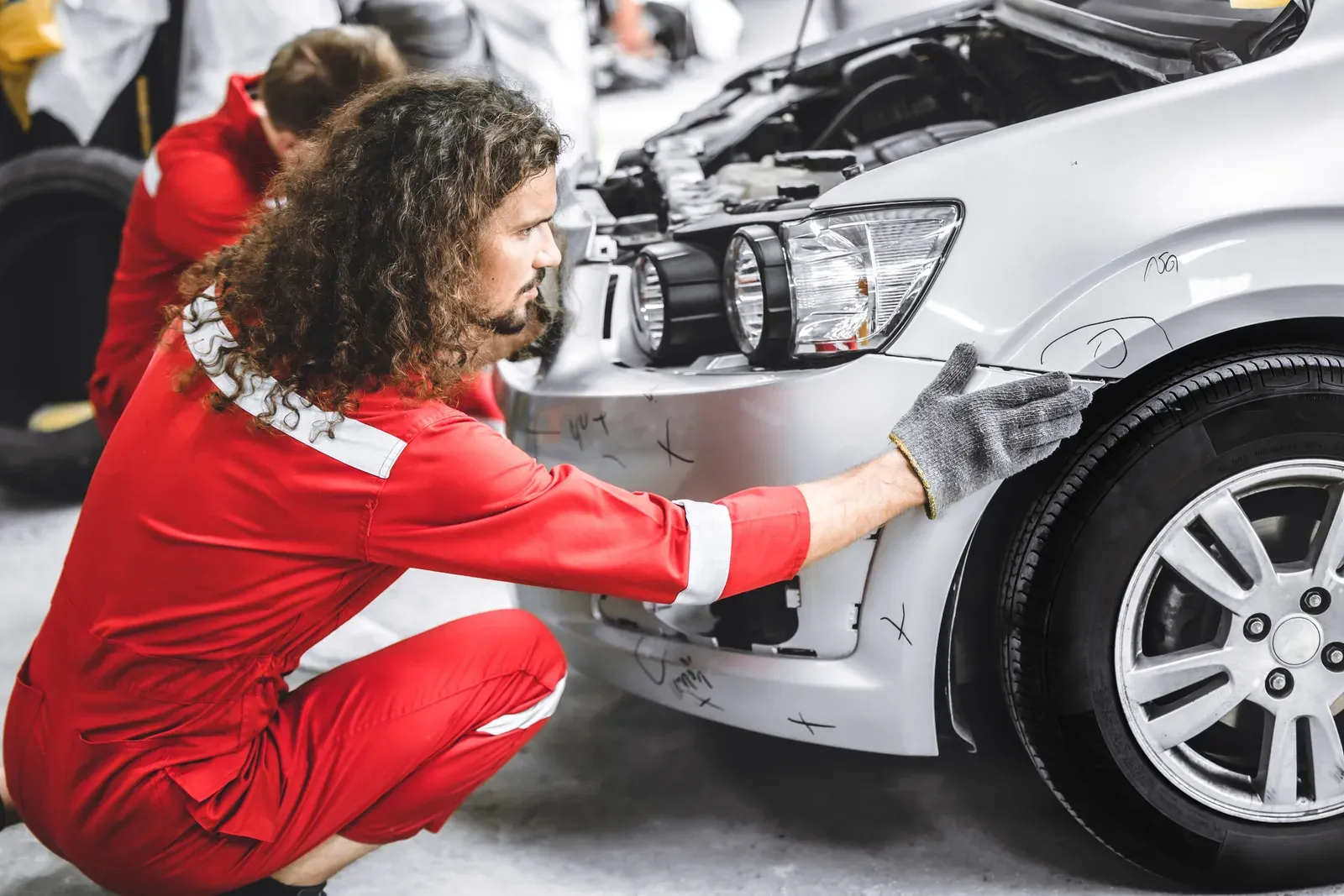
An estimate written from the outside of a car is a guess with a signature on it. We finalize nothing until the damaged corner is apart — cover, liners, lamps, and trim off, so the reinforcement, brackets, and sensor mounts behind the plastic are photographed and priced with the metal in plain view. On anything that took a hit at Trafalgar-Road speed, we measure the structure, because a few millimetres of rail movement is the difference between a cosmetic repair and a structural one, and nobody should discover that in week two.
The repair itself follows factory procedure: structure measured and corrected in documented steps, panels repaired where the metal allows and replaced where it does not, and OEM parts requested wherever the damage touches a safety system — an argument we make to your insurance company ourselves. Paint is mixed to your code, sprayed out, checked against the adjoining panels, and blended so the repair has no visible edge in daylight. Before the car makes the 401 run back to Halton Hills, it gets a final inspection and a road test.
- Damaged area disassembled and photographed before the estimate is final
- Structural measurement on any highway-speed or intersection hit
- OEM parts requested where safety systems are involved
- Lifetime warranty on paint and refinish work
The claim moves before the car does
Ontario runs vehicle damage through DCPD: when you are not at fault, in whole or in part, your own insurance company pays for your car, with percentages assigned under the province’s Fault Determination Rules. Report through a Collision Reporting Centre when anyone is hurt or combined damage looks likely to pass $5,000 — two modern bumpers can clear that threshold on their own — and notify your insurance company promptly; the standard policy expects notice within about seven days.
Text three photos and your claim number to (647) 594-3401 and the file opens here while the car is still in your driveway on Mountainview Road. The owner talks to the adjuster, files the supplement when teardown finds what the photo estimate missed, and books your rental through your coverage so it starts the moment you hand over the keys. If the car cannot drive, Ontario’s towing rules put the destination in your hands — name Collision Auto Center, North York, and we coordinate from there. Hours are Monday to Saturday, 8 AM to 7 PM, Sundays by appointment.