A city engineered for bumper contact
Cambridge traffic concentrates in exactly the places bumpers get hurt. Hespeler Road’s light-to-light crawl produces the daily rear-end tap. The Delta squeezes four busy roads into one decision point. Franklin Boulevard’s roundabouts sort most drivers out fine and punish the hesitant with a clipped corner. Down in the old cores, parallel parking on Main and Ainslie is a contact sport played politely, and every century-street driveway hides a January windrow that catches front lips on the way out.
The seasonal spike is predictable. The first properly slick morning each winter stretches braking distances before anyone has adjusted, and the rear-end count on Hespeler Road and the 401 ramps jumps with it. Almost all of it looks cosmetic from the curb — a scuff, a short crack, a cover sitting slightly proud on one side. That last one matters most: a cover that no longer sits flush is usually telling you the clips or the absorber behind it already gave up.
Pricing a bumper starts by removing it
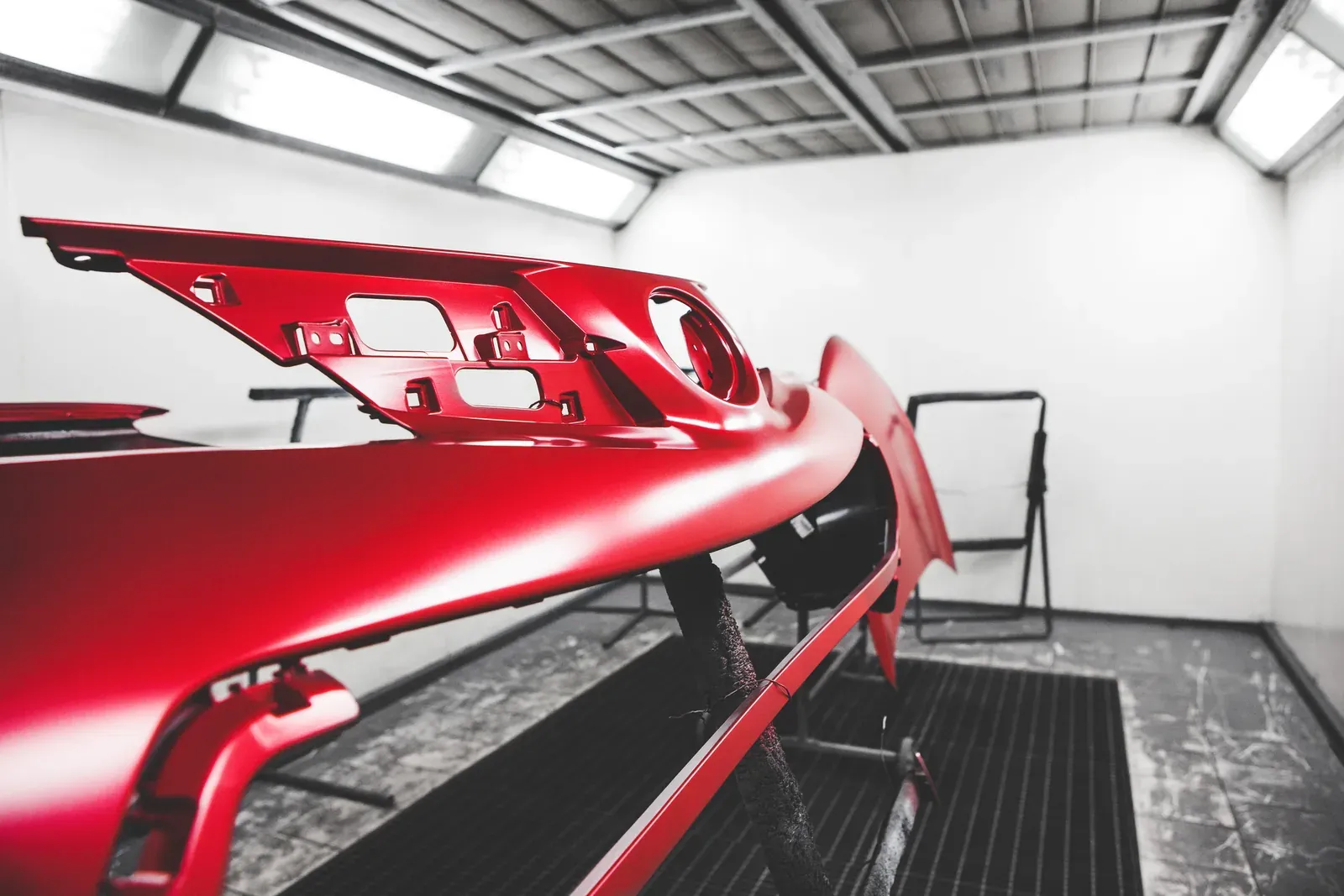
On anything built in the last decade, the bumper is a sensor housing that happens to be paintable. Behind the cover sit an energy absorber, mounting brackets, park-assist sensors, often radar for automatic braking, and the wiring feeding all of it. A 10 km/h tap can crush the absorber and crack bracket tabs while the plastic springs back looking nearly fine — so the cover comes off, the hardware behind it gets photographed, and only then does the number become final. Claims built this way do not stall on surprise supplements halfway through.
Then the fork in the road, priced honestly. Sound plastic with scuffs or a short crack gets repaired and refinished under the lifetime paint warranty. A cover torn at its mounts, or anything hiding crushed structure, gets replaced — OEM parts requested where sensors and radar attach, because bracket geometry is what aims the electronics. After reassembly the systems are verified, and recalibration is arranged whenever the manufacturer’s procedure demands it, billed to the claim as part of the repair rather than sold as an extra.
- Cover off and everything behind it photographed before pricing
- Repair where the plastic is sound, replace where the structure failed
- OEM parts requested where sensors and radar attach
- Systems verified and recalibration arranged per the manufacturer
Claim it or pay it — the Cambridge version of the math
A cosmetic scuff you would pay for yourself rarely justifies the 401; a shop on Hespeler Road will do fine, and it costs nothing to hear us say it after seeing your photos. The calculation flips once a claim exists: from that moment the work is phone calls and paperwork the owner handles from our office off Keele just south of Sheppard, and the distance stops being your problem. Worth knowing — Ontario’s reporting threshold is combined damage likely over $5,000, and two sensor-loaded bumpers can reach it, so when in doubt, report at a Collision Reporting Centre and let the paperwork be boring.
Logistics run the usual pattern for our Cambridge files. Written estimate from photos, parts confirmed before the car is booked, drop-off paired with a commute or handled by flatbed, rental through your coverage timed to the handover. The shop is open Monday to Saturday, 8 AM to 7 PM, with Sundays by appointment; the number is (647) 594-3401.