What the bluffs and the salt do to a finish
Paint in Birch Cliff fights on two fronts. The first is Kingston Road: from the first salting in November to the last melt in April, every car that drives it or parks within a lane of it wears a fine film of brine. That film finds its way into stone chips on the hood, scrapes on the rockers, and the sandblasted lower edges behind each wheel — and once it is under the paint, corrosion does not stop for summer. Wheel arches bubbling from the inside out are the most common paint job we quote from this neighbourhood, and they always started as damage somebody meant to get to.
The second front is the sky. The blocks near the bluff edge sit in open lake light, and a car without a garage — or with a garage full of renovation materials, which in Birch Cliff amounts to the same thing — takes ultraviolet on the hood, roof, and trunk every day of the year. Clear coat oxidizes, darker colours flatten first, and by the time the hood visibly disagrees with the doors, the finish has been failing for seasons. Polishing buys time early; once the clear has broken down, refinishing is the fix that lasts.
Matching new paint to an eight-year-old panel
The paint code on your door jamb describes the car as it left the factory, not as it looks after years above the lake. So we treat the code as the starting point: the mix is sprayed on a test card, held against your actual panel under corrected light, and adjusted until the fresh paint and the weathered paint read as one surface. Then the colour is blended into the adjacent panels rather than stopped at a panel edge — a hard edge is precisely what the eye picks up in low sun along Kingston Road.
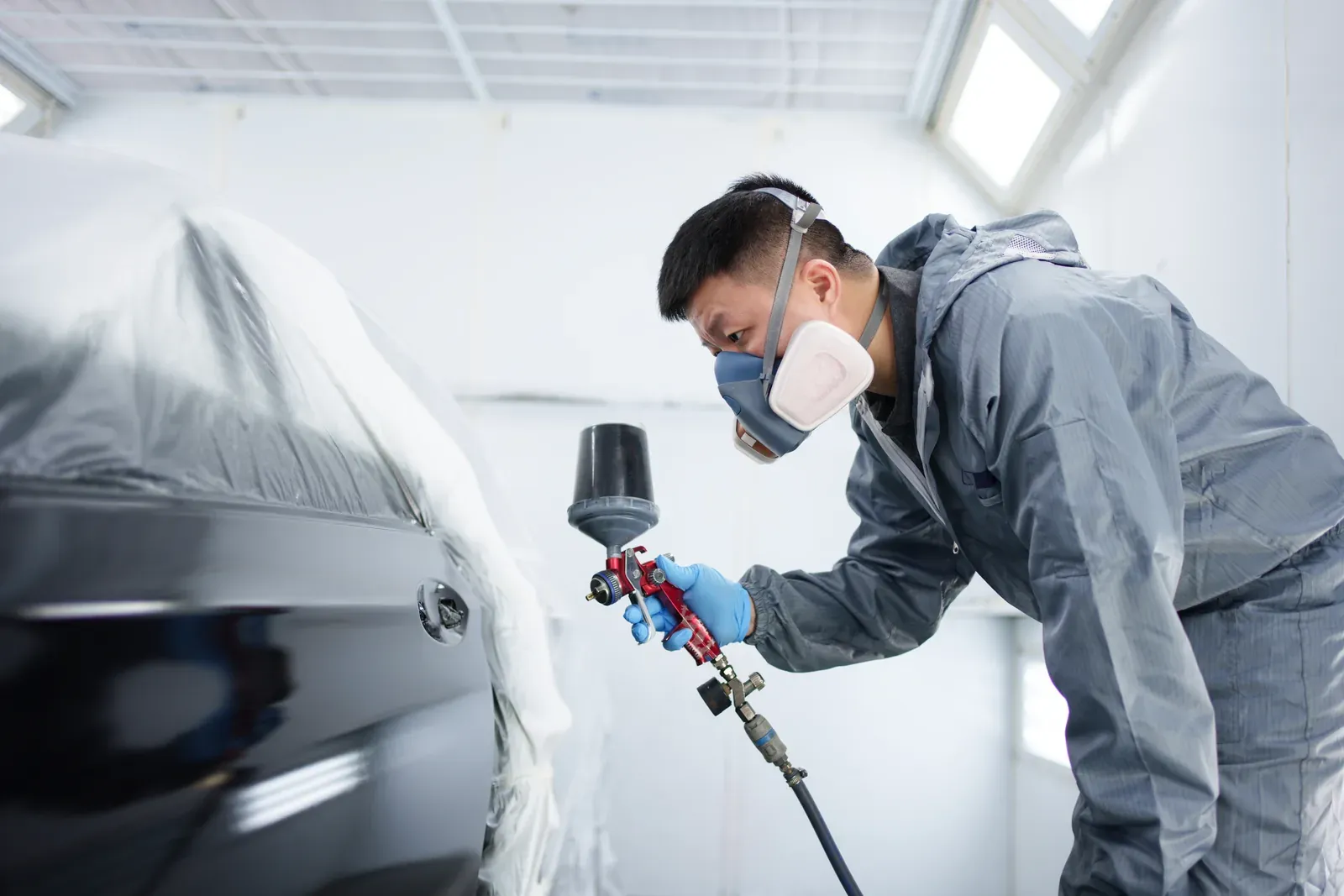
Preparation carries the job. Dents are worked flat, broken clear coat is cut back, and corrosion that reached the damage is removed to clean metal instead of being sealed under fresh paint where it would keep spreading — on a salt-belt car, that last step is the difference between a repair and a delay. The spray happens in a controlled booth, the cure happens under proper heat, and nothing leaves without inspection. Every refinish we deliver carries a lifetime warranty for as long as the vehicle is yours.
Claim work, and the honest line around it
When paint damage is part of an accident — a scraped quarter from a mutual-driveway squeeze, a repainted door after a Warden intersection hit — it belongs in the claim, and we run that claim with your insurance company from our office, including the case for blending into neighbouring panels as part of a correct repair. Just as important is the line we will not blur: an adjuster can tell accident damage from age, and so can we. If part of what you show us is wear rather than the incident, we say so before anyone opens a file — coverage rides on eligibility, your policy, repair approval, deductibles, and the insurance company’s decision, and pretending otherwise helps nobody.
Start with photos taken in good light and we will send back a written number plus a frank read on what is worth doing. The drive from Birch Cliff runs about 24 to 34 minutes — Kingston Road to the DVP or Warden to the 401 — and we schedule paint work so the car makes that trip once. Doors open Monday through Saturday, 8 AM to 7 PM, Sundays by appointment, and the owner walks the finished panels with you at pickup.
- Colour tuned against your car’s real panels, not just the code
- Blended into adjacent panels — no visible repair edge
- Corrosion at the damage cut to clean metal before refinishing
- Lifetime paint warranty, in writing