How should I care for new paint after a repair?
Quick answer
Be gentle with fresh paint for roughly the first month while the film finishes curing. Hand wash only, with pH-neutral soap and a soft mitt. Skip brush tunnels and high-pressure spray at panel edges. Hold off on wax, sealant, or ceramic coating until the shop confirms the film has fully outgassed — and get bird droppings and sap off the same day they land.
- Drivable or not
- At fault or not
- Free written estimates
"Cured enough to drive" is not "fully cured"
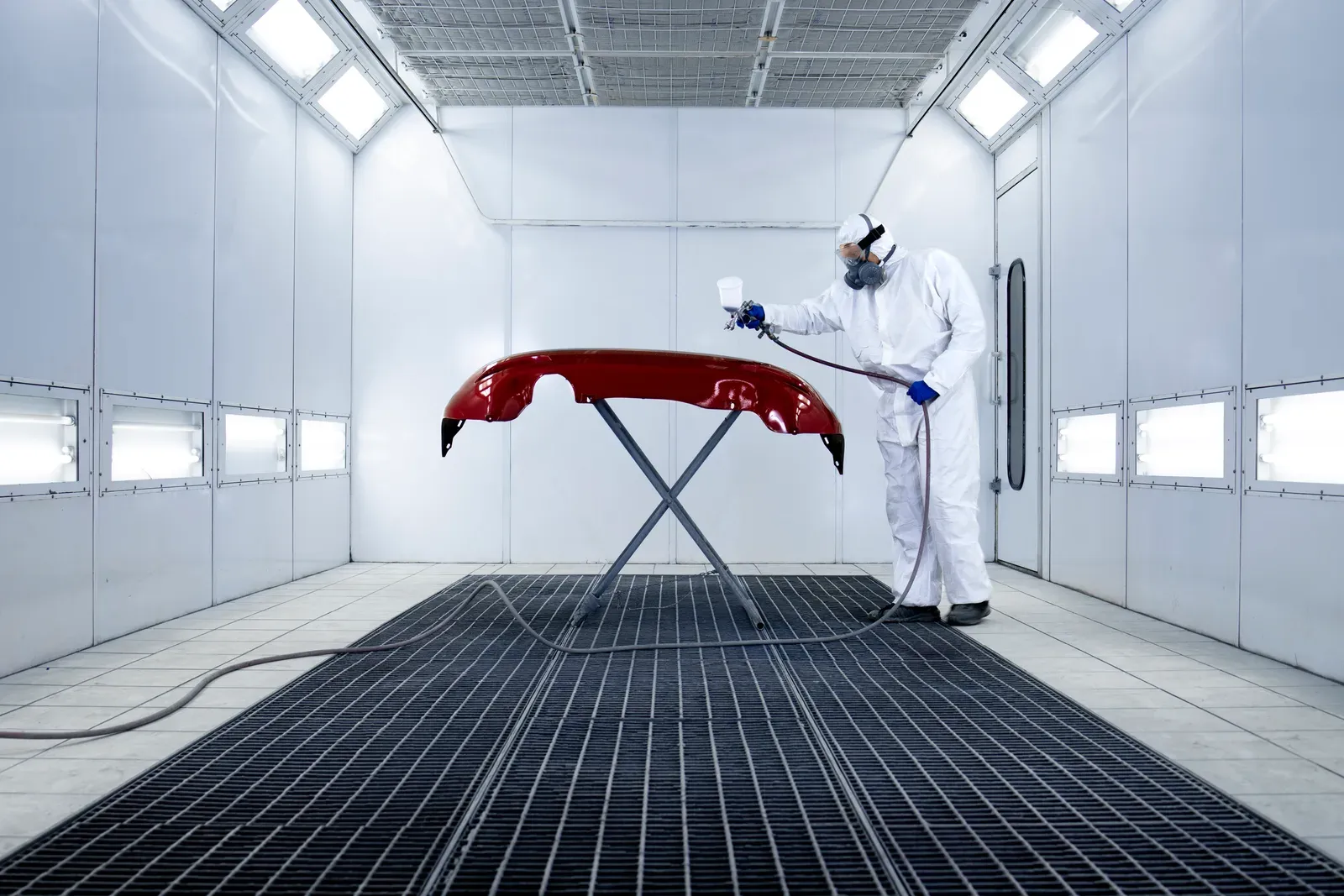
A refinished panel leaves the booth baked hard enough to handle, reassemble, and drive — which is why you can collect the car the same day it was sprayed.
Underneath, the chemistry is still working. Two-component urethane clear keeps crosslinking for weeks, and solvent keeps migrating out of the film the whole time. Through that window the finish is slightly softer than its final hardness, and it needs to breathe.
That single fact explains nearly every rule below. A softer film scratches more easily, and a film still releasing solvent must not be sealed under a coating that traps it — that trap is exactly what causes the hazy, blotchy look people get from waxing a new repair too soon.
The practical figure most refinish systems point to is about thirty days. Ask for the number that applies to the product on your car — we hand written care instructions to every customer at pickup.
The first month: what to avoid
Almost everything on this list reduces to two ideas — do not seal a film that is still outgassing, and do not scratch a surface that has not reached full hardness.
- No wax, sealant, or ceramic coating until the cure window closes — they seal solvent into the film
- No automatic washes, above all brush and cloth tunnels — the fastest route to swirl marks in soft clear
- No high-pressure spray aimed at panel edges, seams, or fresh masking lines
- No harsh degreasers, bug and tar removers, or wheel cleaners near the new panel
- No parking under trees — sap and droppings are acidic and etch soft clear quickly
- No car cover, which holds moisture and grinds grit into the finish every time it shifts
- No decals, badges, magnetic signs, or protection film on the fresh panel yet
- Skip gravel roads where possible, and give trucks extra following distance on the 400-series
How to wash it in the meantime
Washing is encouraged — grime left sitting does more harm than a careful wash ever will. Give it a few days after pickup, then hand wash in the shade with cool water, a pH-neutral car soap, and a clean microfibre mitt.
Run two buckets — one for soap, one for rinsing the mitt — so grit never rides back onto the paint. Work top to bottom, rinse generously, and dry with clean microfibre or let it air dry rather than dragging an old chamois across it.
If something lands on the panel — droppings, sap, bug splatter, tar — lift it the same day with plain water and a soft cloth. Those are acids on soft clear. No scrubbing, no solvents.
The safe wash, condensed:
- Wash in the shade, never on a sun-hot panel
- Cool water, pH-neutral soap, a clean microfibre mitt
- Two buckets — soap in one, grit rinsed out in the other
- Top down, and rinse each panel before it dries
- Dry with clean microfibre, or let it air dry
- Keep dish soap, degreasers, and household cleaners far away
Toronto timing: when the cure window meets salt season
If your repair wraps up in late fall, the cure window overlaps the first brine trucks, and the advice shifts slightly. Rinse the car when temperatures allow rather than letting salt film sit on fresh paint — but keep it to gentle hand washing or a touchless bay, never a brush tunnel.
The moment the cure window closes, get a wax or sealant on before deep winter. That sacrificial layer keeps chloride from sitting directly on the finish, and it lets the salt film release far more easily at every wash.
Cold on its own does nothing to cured paint. What hurts it is salt, sand, and a stiff snow brush.
One more winter note: a fresh panel is an excellent reason to be careful with the ice scraper. Scrape glass, not paint — and never chip ice off a painted surface with anything hard.
After the first month
Once the film reaches full cure, treat the repaired area like the rest of the car — and keep treating the whole car well, because paint life is decided by UV and contamination, not by birthdays.
Wax or seal two or three times a year, or step up to a ceramic coating for a longer-lived sacrificial layer. Take the garage or the shade when offered. And seal rock chips while they are still chips, before GTA salt finds the break in the film.
If you want paint protection film on the new panel, wait out the cure window and have it installed by someone who does it weekly. Film over paint that is still outgassing can trap solvent and print marks into the finish beneath it.
You may notice a whisper of difference in gloss or texture between new and old paint in the first weeks. Fresh film settles as it cures and a blended repair evens out. If it still bothers you after the window, bring it back and we will look together.
Our paint and refinish work carries a lifetime warranty. If anything ever looks off — a spot going dull, an edge lifting, colour drifting — bring it in. We would far rather see it early than hear about it years later.
Keep the paperwork from the repair with the car, too. The care instructions, the invoice, and the warranty terms answer most questions before they become phone calls — and when you eventually sell, a documented, warrantied refinish reads very differently to a buyer than an unexplained shiny panel. Five minutes of filing now beats an hour of reconstructing history later.