How do body shops match car paint exactly?
Quick answer
Shops start from your factory paint code, then refine it: a spectrophotometer reads the actual colour off your car (paint fades and varies by assembly plant), software picks the closest formula, and a sprayed test card is checked against the panel under colour-corrected light. The finishing move is blending into adjacent panels so no visible edge exists.
- Drivable or not
- At fault or not
- Free written estimates
Why the paint code alone isn’t enough
Two cars wearing the same code can measure visibly different: assembly plants vary batch to batch, and a decade of Ontario summers, road salt, and freeze–thaw winters shifts every finish. Spray the factory formula straight onto a faded car and you get a patch you can spot from across a Costco lot.
So we measure the car itself. A spectrophotometer reads the colour as it exists today, the mixing software tints the formula toward that reading, and the target becomes your paint as it is — not as the build sheet remembers it.
Blending — the professional difference
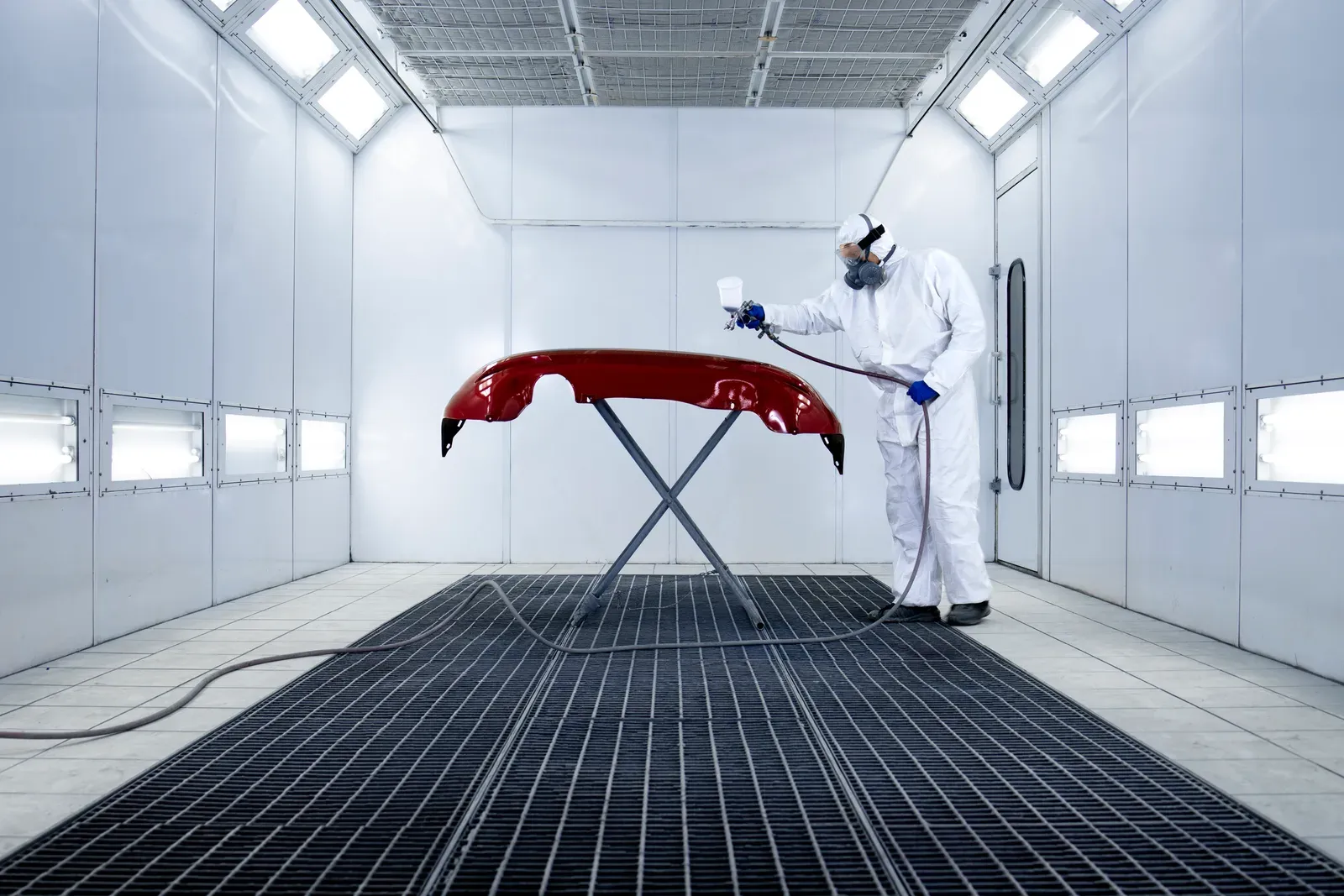
Even a perfect mix can betray itself if the new paint stops dead at a panel gap. Blending fades the colour into the neighbouring panels and clears the whole area, so light rolls across the repair without ever finding a transition line.
Metallics, pearls, and tri-coat whites and reds make blending non-negotiable — flake orientation changes with spray angle, which is why booth technique matters every bit as much as the formula in the gun.
How to judge a shop’s colour work
Ask to see finished work in the colour families that punish shortcuts: silver metallics, tri-coat pearls, and straight black. Ask how the shop verifies a match — the right answer involves a sprayed test card compared against your panel under colour-corrected light, not a squint in the sun. At Collision Auto Center every refinish is checked that way, and the paint carries our lifetime warranty in writing.