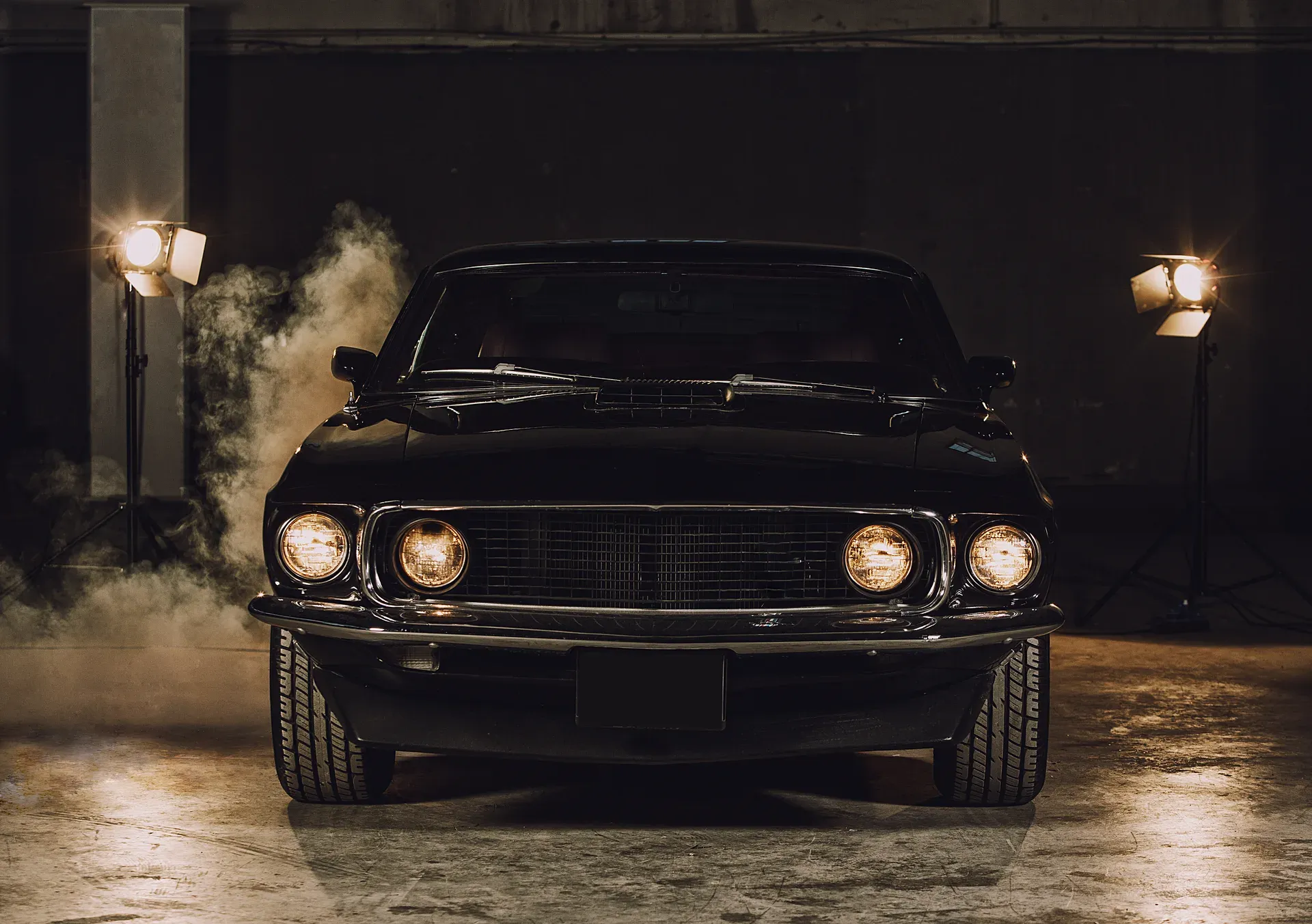
Aluminum runs deep in a modern Mercedes
Mercedes-Benz has spent years migrating aluminum into its shells — on the S-Class it covers doors, hood, fenders, roof and structural members, while the C-Class, E-Class and SUVs use it selectively for closures and front-end parts. Aluminum joins by riveting, bonding and specialized welding rather than a standard spot welder, and it will not accept heat to relax a crease the way steel does.
It also demands strict separation from steel work, because steel particles left on bare aluminum seed galvanic corrosion — the kind Toronto road salt accelerates and fresh paint hides for a season or two. Aluminum panels get dedicated tooling and abrasives here, and every joint type, adhesive and fastener spec comes from the procedure Mercedes-Benz publishes for that body. Getting it wrong shows up as bubbling under a fender two winters later, long after anyone remembers who did the work.
The three-pointed star is a radar window
On models with distance assist and active brake assist, the long-range radar sits behind the grille panel and reads through the star emblem area — a part built to pass a radar beam, not to be decorative metal. The multipurpose camera behind the windshield handles lane keeping and traffic sign recognition. One front impact in Eglinton traffic can disturb both, and neither announces the problem politely.
Every Mercedes-Benz here is scanned on intake and after reassembly, genuine parts are specified for the grille, emblem and fascia wherever a sensor reads through, and every calibration the manufacturer publishes for the work performed is completed before release. Mild-hybrid models get their 48-volt circuit isolated before nearby work begins — forty-eight volts will not stop a heart, but it will arc across a dropped tool and destroy components that are anything but cheap.
- Aluminum panels worked with tooling kept clear of steel contamination
- Genuine grille, emblem and fascia parts specified in the radar path
- Multipurpose camera calibrated to procedure after windshield work
- 48-volt and high-voltage circuits isolated before adjacent structural work
Matte designo finishes and dark-colour discipline
Mercedes-Benz magno matte finishes follow the universal factory-matte rule: no polishing, no compounding, no local correction of any kind. The flat appearance is a property of the clearcoat surface, and an attempted buff leaves a shiny patch that can never be undone. A damaged magno panel gets refinished with the matte system or it does not get fixed properly — there is no third option worth selling.
The gloss side of the palette is its own exam. Obsidian Black and the deep metallics expose every imperfection in the substrate, so the bodywork has to be genuinely flat before primer, and the colour has to travel into adjacent panels as a blend rather than stopping at a gap. We spray a card, check it in two lights, adjust, then shoot the car in the downdraft booth. On a dark Benz, the blend is what sells the repair — every single time.