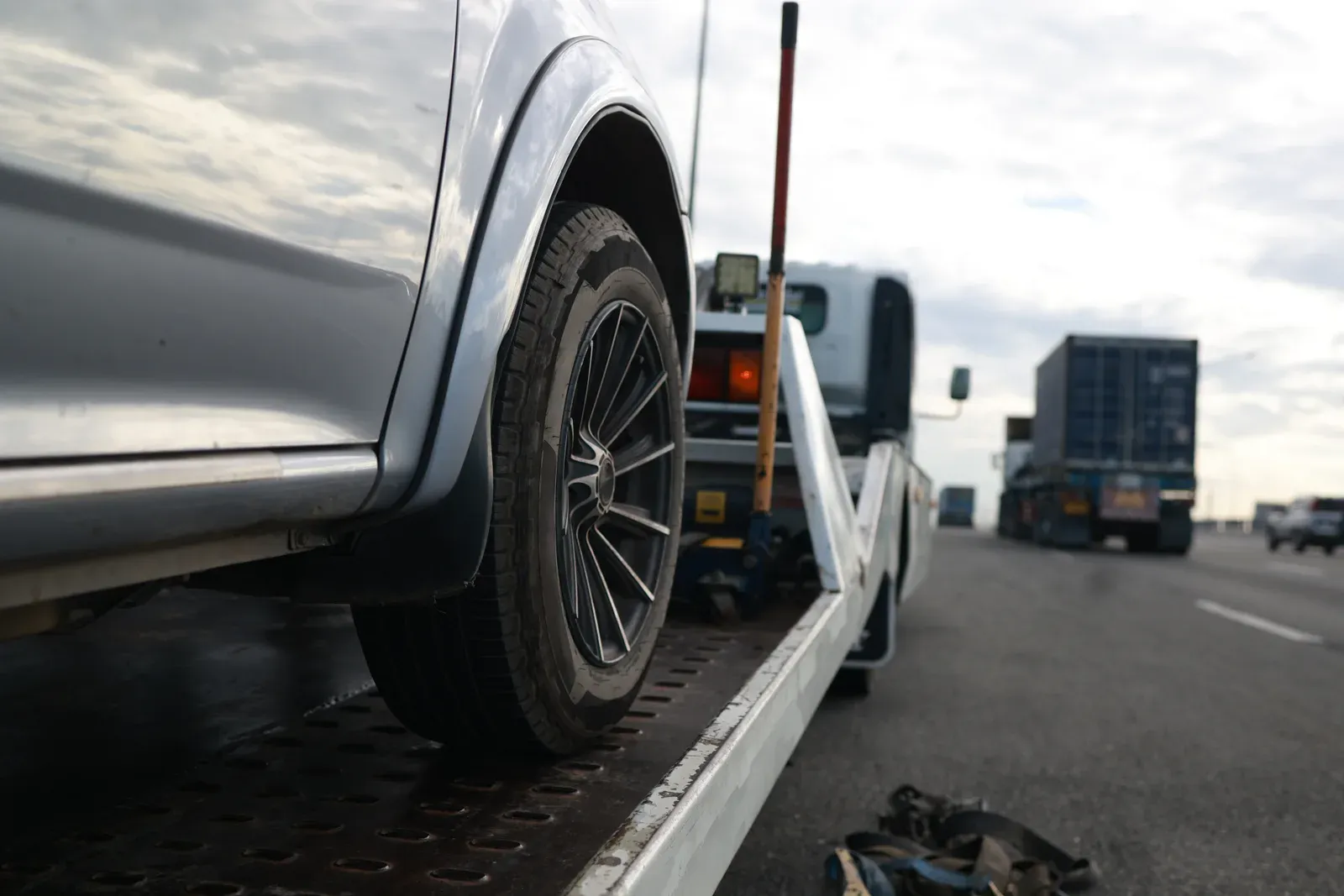
Step one: find out where your car actually went
When a collision on the 401 or a city arterial leaves a car unable to move, the tow tends to happen in the blur — while you are trading information, talking to an officer, or getting checked over. Ontario’s towing rules work in your favour here: a tow operator is supposed to identify their company, get your consent before hooking up, and give you an itemized invoice that names where the vehicle is going. If you have any scrap of that paperwork, the yard’s name is on it.
If you have nothing, work backwards. An officer who attended the scene can tell you which operator took the car. If you filed at a Collision Reporting Centre, the report you completed there records what happened to the vehicle. And if you called the tow through your own roadside assistance or your insurance company, the confirmation text or the claim file names the destination.
Once you know the yard, check its hours before anything else. Storage yards keep shorter hours than the plazas around them, and missing the release window by twenty minutes means another day on the bill. While you are at it, gather paper: the invoice, any texts from the tow company, and the date the car arrived. Those small records settle later arguments about when charges started — arguments that are hard to win from memory.
Why sitting at the tow yard costs you money
Storage starts accruing the day the car rolls off the flatbed, billed by the calendar day whether anyone touches the vehicle or not. Nothing useful happens at a storage yard. No estimate gets written, no parts get ordered, no claim moves. The yard is a parking spot with a meter running, and in the GTA that meter is not cheap.
Insurance companies generally pay reasonable towing and storage on a covered claim — under DCPD when you were not at fault, or under collision coverage when you were. What adjusters push back on is the avoidable portion: charges that ballooned because a car sat unclaimed for a week. The longer the wait, the more likely a slice of that bill drifts toward you.
There is a quieter cost too: the claim itself stalls. An adjuster cannot evaluate a car behind a locked gate, a shop cannot write a teardown estimate on a vehicle it does not have, and every stalled day is a day you are without transportation. Moving the car is what restarts the clock on everything else — the estimate, the parts, the rental.
How to get the car released
Release procedures vary from yard to yard, but the same short list opens almost every gate in the GTA. Phone the yard before you go so you only make the trip once — some take cards, others want cash or debit, and it is better to learn that from your couch than at their counter.
Most yards will also release the vehicle to someone you send in your place, provided the fees are settled and your authorization is in writing. That matters when you are sore from the collision, stuck at work downtown, or simply without a second car to get across the city.
- Photo ID matching the registered owner, or a written authorization naming whoever you send
- Proof of ownership — the green Ontario ownership permit from the glovebox satisfies most yards
- Payment for the tow and storage to date, on an itemized invoice you are entitled to see
- The next destination — tell them a body-shop tow is coming so the car gets staged for pickup
Send it straight to the shop, not to your driveway
Towing the car home feels like progress, but it usually splits one problem into two: you pay for that tow now and a second one later, once a shop takes the job — and a leaking, crumpled car in a driveway or a condo garage helps nobody. The cleaner path is a single move from the yard to the shop, where teardown can begin, the damage gets photographed properly, and the tow becomes a documented line on the claim instead of a loose receipt.
Remember that in Ontario the destination is your call. A tow operator or a yard can suggest a shop; your insurance company can recommend one from its preferred list; neither can decide for you. Give us the yard’s name and your release authorization and we coordinate the pickup — including yards that will only hand a vehicle to another tow operator. The car lands at our shop off Keele just south of Sheppard without you ever standing in a storage office. If you are hurting or just worn out, say so — the whole handoff runs over the phone.
What happens once the car is here
A car that needed a flatbed almost always carries damage the outside does not show, so the estimate starts with teardown rather than a clipboard walk-around. Everything gets photographed as it comes apart, the documentation goes to your insurance company, and you come off the phone-tag treadmill. The owner writes the estimate himself, and it costs you nothing.
If teardown shows the damage runs deeper than the car is worth, the same documentation still earns its keep — it anchors the valuation conversation instead of leaving an adjuster to judge from a few yard photos. Either way, the storage meter stopped the day the car left the tow yard, and that alone justifies moving fast.
Your part shrinks to a few phone calls. Confirm the claim is open — Ontario policies expect notice to your insurance company promptly, within days, not weeks — tell them which shop has the car, and let us know how to reach you. If you need a rental while the car is down, say so early; we coordinate one through your coverage, and the sooner it starts, the less of your week this collision borrows.