The first dent stings — the repair decides what it means
Nobody forgets the first scrape on a new car. Weeks of careful parking undone by a driver misjudging a Yorkdale parking row, a concrete pillar in the condo garage, or a stranger who didn’t leave a note. The sick feeling is universal, so here’s the perspective that actually helps: what the damage means for your car long-term is decided almost entirely by the quality of the repair, not by the incident itself.
A nearly new car is also the easiest car to repair invisibly. The paint hasn’t weathered, the panels around the damage are factory-fresh reference points, and there’s no accumulated history to work around. Repaired to the right standard, panel fit, finish and corrosion protection all return to as-built condition — which is exactly the standard worth insisting on.
Start by getting an honest read on what you’re actually dealing with. Send photos and you’ll have a written number back fast, which converts the knot in your stomach into a plan with a figure attached. Sometimes the news is better than the parking garage made it look: a scuff that turns out to be the other car’s paint, or a shallow dent that can be repaired without disturbing the factory finish at all.
You will never have a stronger case for OEM parts
Every other panel on your car is an original factory part. Installing an imitation bumper cover or fender on an otherwise all-original vehicle is where the OEM argument stands at full strength — fit tolerances, crash behaviour, corrosion protection and resale all point the same way, and there’s no “the car’s old anyway” counterweight on the far side of the scale.
Our preference is OEM by default, and on late-model vehicles we press that case with the insurance company at estimate time. The tactics — what your policy language says, what to ask for, how the approval conversation runs — are laid out in our answer on getting OEM parts approved, linked below. Read it before the estimate is written, because that’s the moment the parts decision actually happens.
Hold the finish to the factory standard
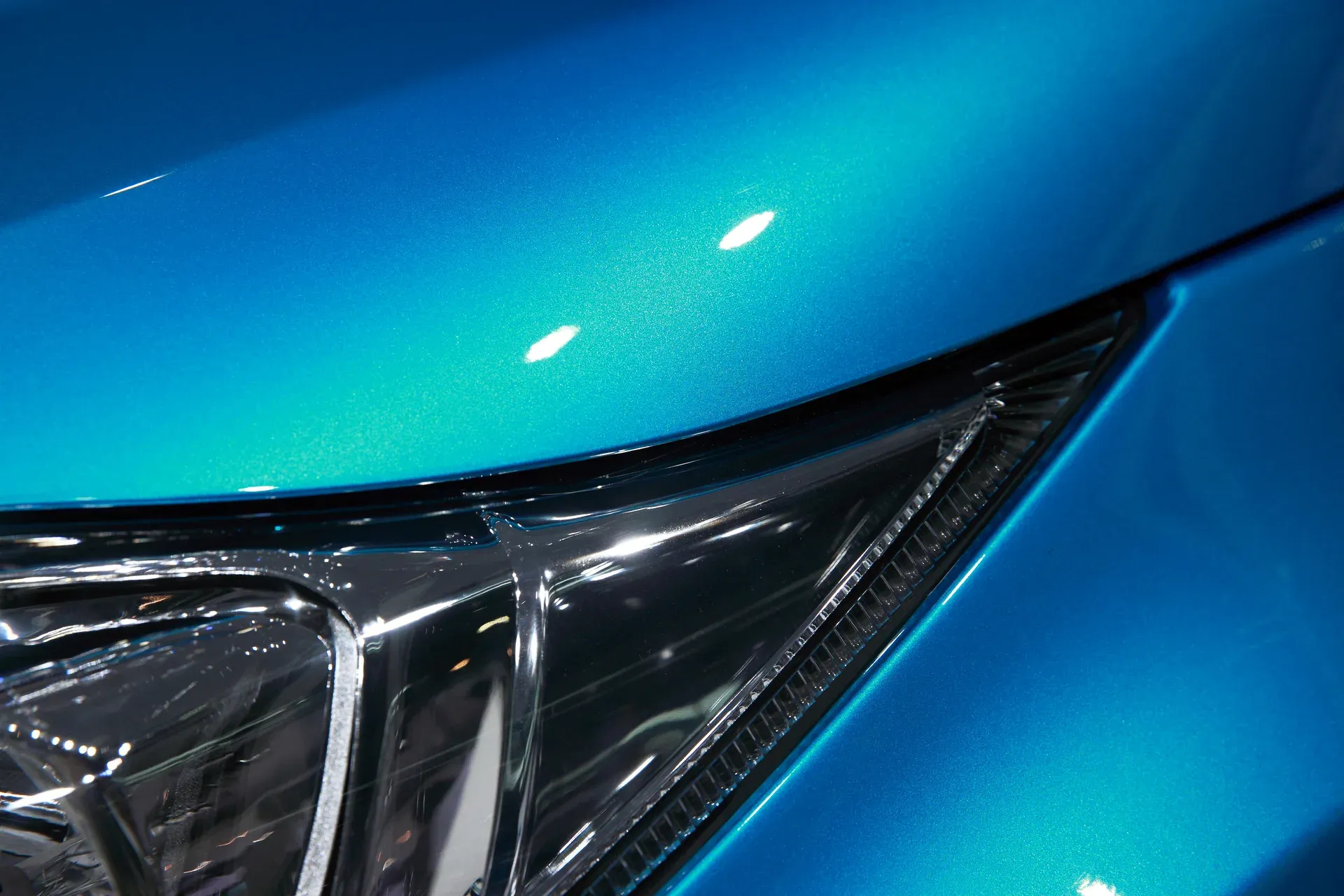
On a car with three-year-old paint, a refinish has to match aged colour. On a nearly new car it has to match perfect paint — which is less forgiving, not more. Modern factory finishes, especially whites, pearls and fine metallics, demand a sprayed test card, blending into adjacent panels, and a clean booth to land invisibly. That is precisely the job our colour-matching process and spray booth exist for.
Hold the details to the same bar. Emblems and mouldings should come off rather than be masked around. Panel gaps should mirror the untouched side of the car. Texture on a repainted bumper should read like its neighbour. New-car owners sometimes feel fussy asking for all this; you’re not being fussy, you’re asking for the standard the car had last month.
Corrosion protection is the invisible half of the factory standard. New vehicles leave the plant with coated panels, sealed seams and protected cavities, and a proper repair rebuilds each of those layers in the repaired area rather than trusting paint alone to hold off Toronto’s salt seasons. It’s the part of the job you’ll never see — and the part that decides whether the repair still looks perfect when the financing is paid off.
Value on paper: history reports and what buyers see
An accident on a vehicle history report changes what buyers offer, and the effect is biggest on new, high-value vehicles — there’s simply more value in play. You can’t erase the entry, but you control the story it tells: a documented repair with OEM parts on the invoice and a written warranty reads as a well-kept car, while a vague bargain repair reads as a gamble the next buyer prices against you.
If someone else caused the damage, the gap between your car’s value before and after the incident is a separate conversation with the insurance company, and it lives or dies on evidence. The repair file is that evidence. Whether and how such claims succeed in Ontario depends on the circumstances — our diminished value answer, linked below, walks through it honestly.
Put the pieces in the right order: complete the repair first, documented properly, then raise the value question while the claim file is fresh. Arguing lost value before the car is even fixed muddies both conversations, and the repair records end up as the backbone of the value discussion either way.
Skip the shortcuts you’d stare at for a decade
The tempting move after a first scrape is the fastest, cheapest fix — a touch-up pen dragged through a deep scratch, the lowest windshield-glance quote, a repaint without blending. On a car you’ll drive for years, those shortcuts age badly: mismatched panels that grow more obvious as the paint weathers, corrosion creeping out of an unsealed repair, bumper texture that never looked right. You end up paying twice to have it done properly once.
Do it once instead. Send photos, let teardown-first estimating find everything on the first pass, and leave with the repair documented and the paint under our written lifetime warranty. The incident gets forgotten; the repair quality is what you live with every day after.
Two habits worth starting now. First, keep a repair folder for the life of the car — this first estimate, invoice and warranty go in it, along with your own photos, and years from now a complete file carries real credibility with a buyer. Second, if your new car is an EV or wears a full driver-assist suite, know that repairs carry extra steps — battery-conscious procedures, and camera and radar aiming that our sensor recalibration answer explains without the mythology.