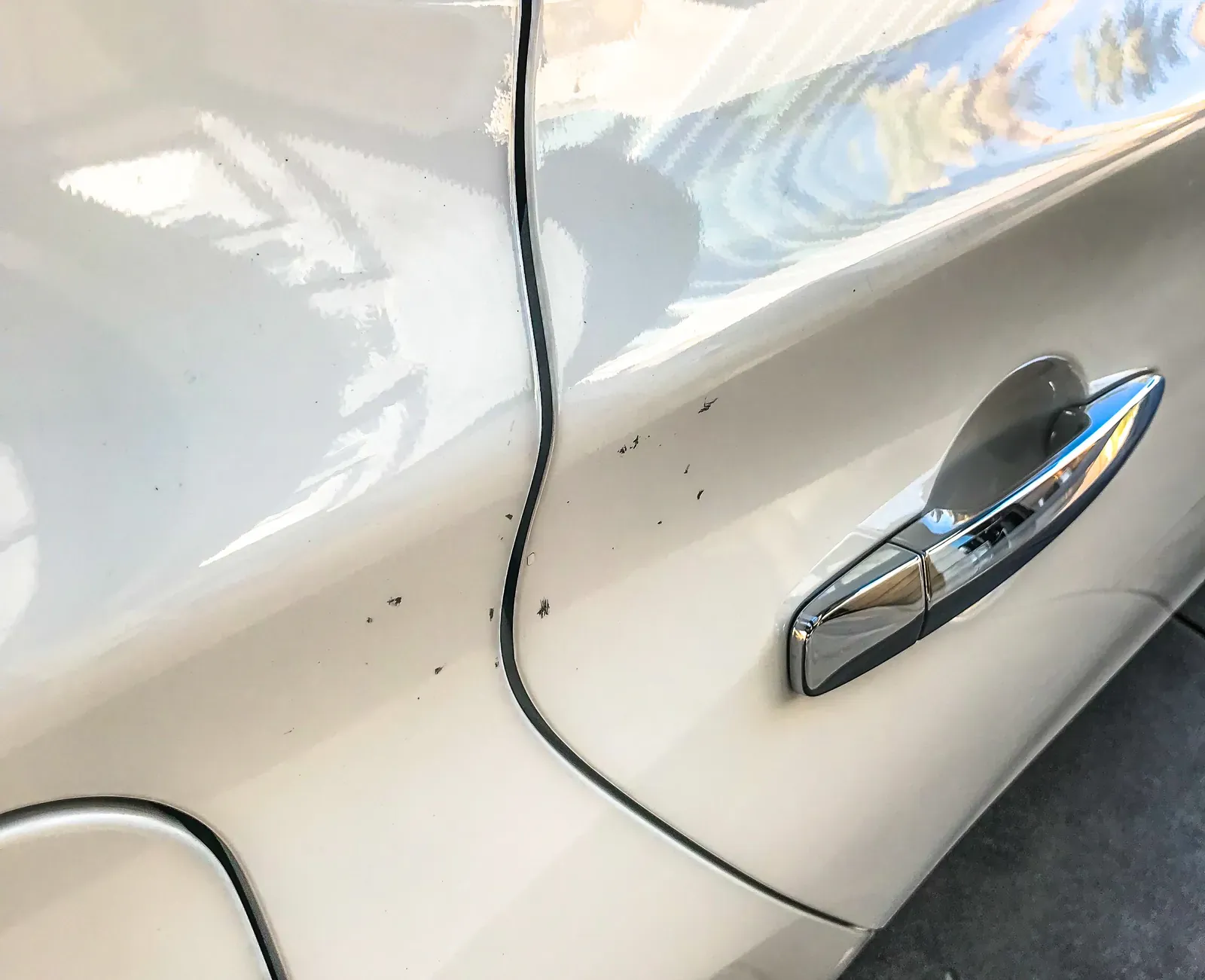
Yes, a body shop just told you that
A surprising number of estimates written here end with some version of: you can leave this alone. That is not reverse psychology — it is the honest reading of a dent that threatens nothing. The owner writes the estimates personally, and one person walks your file from the first photo to the last inspection; telling people the truth about what does not need fixing is how a shop like this earns the second visit and the referral.
A car is a tool for most people. If a ding on a door does not compromise the panel and does not bother you on the walk-up, spending money on it is a choice about aesthetics — and choices about aesthetics belong to you, not to us.
There is a practical reason a repair shop talks people out of repairs: trust compounds. The estimate that says leave it costs us a small job today and earns the collision job, the insurance file, and the long relationship later. Honesty is not charity in this business — it is the long game, and it also happens to be the right thing.
None of this is permission to ignore real damage, so hold the line clearly. Cosmetic means the panel is dented but sealed and everything still works. The moment paint is broken, parts are cracked, or anything electronic sits behind the damage, you have left cosmetic territory and the rest of this page stops applying.
The leave-it checklist
Run the damage through these conditions. Pass all of them and leaving it alone is a perfectly sound decision — the dent is stable, sealed, and going nowhere.
Give it an honest pass rather than a hopeful one. The first two conditions matter most — sealed paint and no bubbling — because in a city that salts its roads from November to April, they mark the difference between a stable dent and a slow project. When in doubt, a close look in raking light settles most of it.
A couple of the conditions deserve a fresh check each season: bubbling, which announces itself slowly, and the horizon question, which changes without ceremony the day you start browsing listings for the next car. Re-run the list whenever either one moves.
- The paint is unbroken — no chips, cracks, or scrapes down to primer or metal
- No bubbling anywhere on or around the damage
- The dent sits in open panel, away from edges, seams, and character lines that trap water
- No lights, sensors, latches, or trim are involved
- No sale, trade-in, or lease return is on the horizon
- It honestly does not bother you when you walk up to the car
When cosmetic stops being cosmetic
Broken paint changes everything in southern Ontario. A crack or chip is an open door for water and road salt, and every freeze–thaw cycle through a Toronto winter wedges it wider — what looked like a scuff in October can be a bubbling rust line by pothole season in March. Damage along panel edges and seams deserves the same suspicion, because those are exactly the places moisture likes to sit.
Bumpers earn a special note. A cracked cover near a parking sensor or radar module is not a looks problem; plastic that has lost its shape can change how those systems read the road ahead of you. And a dent creased sharply enough to crack paint on the back side of the panel can rust from the inside out, where nobody sees it until it is well along. If a chip or scrape has already appeared, our road-salt explainer linked below covers why acting before winter matters.
Location does quiet work in these judgments. The same dent is a shrug in the middle of a door skin and a concern on a hood edge, a rocker, or the lip of a wheel arch, because edges hold water and carry the panel’s strength. If you keep one rule from this page, keep this one: middles forgive, edges do not.
Horizons change the answer
The checklist has a time dimension. Damage you could happily live with for years turns into a liability the moment a sale, a trade-in, or a lease return enters the picture, because visible flaws cost more in those negotiations than the repairs behind them cost at a shop.
The other horizon is a future claim. If the same panel takes a hit later, the insurance company will separate the pre-existing damage from the new when it settles — unrepaired dents effectively come off the payout. Neither point obliges you to fix anything today; they just mean the leave-it decision deserves a quick revisit whenever your plans for the car change. For the separate question of whether a small dent justifies a claim at all, we have answered that in depth already.
Households change the math as often as markets do. A second driver joining the family, the car being handed down to a newly licensed teenager, a move from a garage to street parking where the plows build windrows against your doors — each is a moment when a stable cosmetic flaw deserves a fresh look, if only because the car’s job just changed.
If you decide to live with it
Do three small things. Photograph the damage now, in good light — if anything new happens to that corner of the car later, you can show exactly what was already there, which keeps a future claim clean. Watch the spot every wash, especially through the salt months, for bubbling or a chip you missed the first time. And keep the car washed while the roads are white with brine, because sealed paint is your entire defence.
If you ever want the number just to have it, send photos and a free written estimate comes back quickly. No follow-up calls, no pressure — some of our best customers are people we told not to fix something, years before they needed something fixed.
And if the damage ever graduates — a chip appears, a bubble forms, a line starts showing along the crease — bring it in at that point rather than on a schedule. Cosmetic damage does not become urgent by aging; it becomes urgent by changing. Watching for the change is the entire maintenance plan.