The three real options, in the right order
After a hailstorm you hold three moves: repair the car, sell it wearing the dents, or do nothing for now. They are not equal, and the order you evaluate them in matters. Start with repair, because for most insured owners it is both the cheapest path and the one that preserves the most value; consider selling only once you know what repair would actually involve; and treat waiting as a decision with its own price tag rather than a way to avoid deciding.
The mistake we see most runs backwards — assuming the car is ruined, shopping it to a we-buy-dented-cars outfit, and only later learning the repair would have been routine. Numbers first, decisions second.
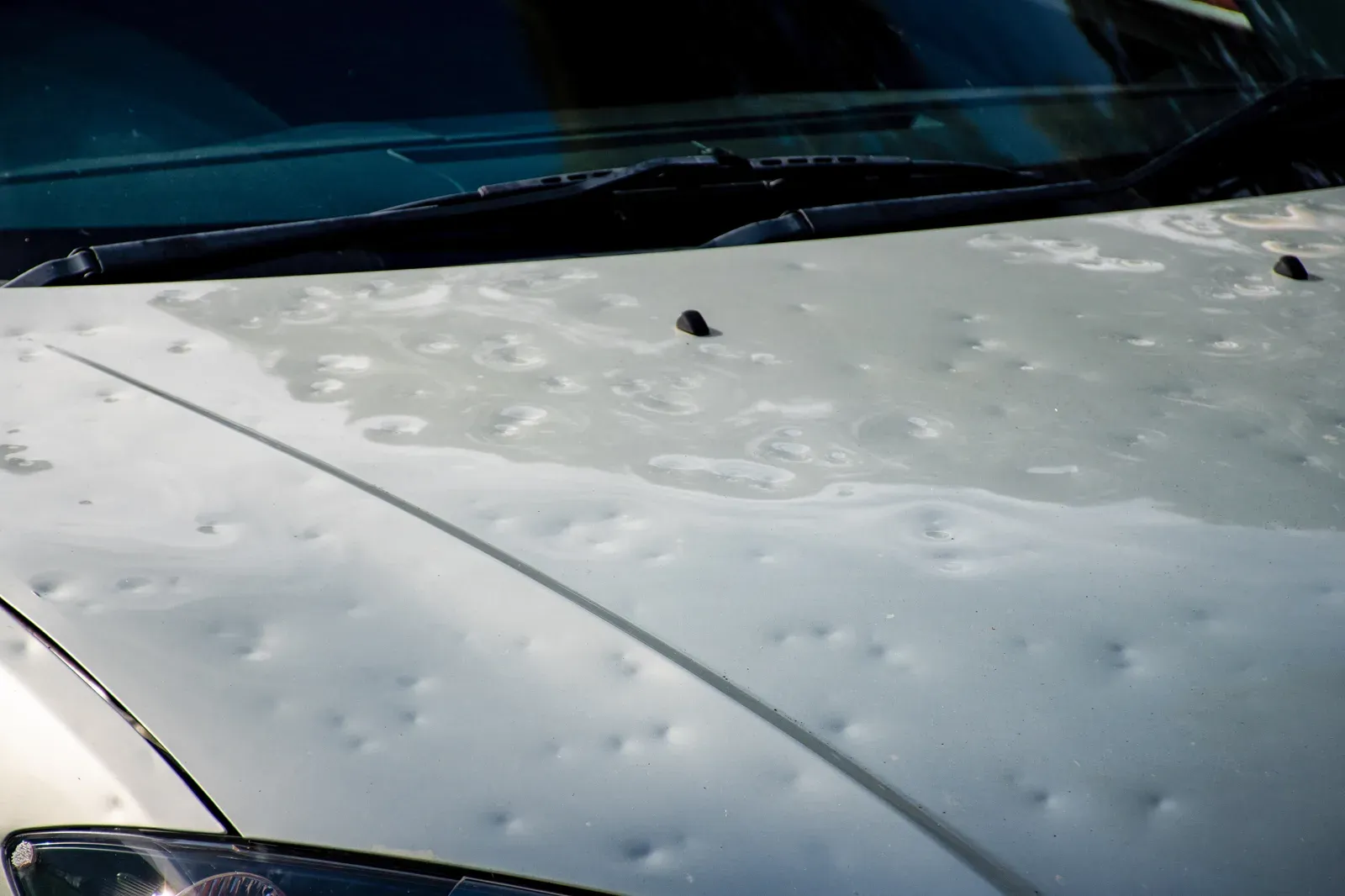
One framing helps the whole exercise: hail is cosmetic damage delivered at scale. The car drives exactly as it did before the storm rolled across the 400-series, which is why waiting feels safe — and why the costs of waiting arrive quietly, through the claim, the calendar, and the eventual sale, rather than through anything you feel from the driver’s seat.
The insurance reality: comprehensive, not collision
Hail falls under the comprehensive portion of your policy, not collision. Nobody is at fault when a thunderstorm opens over the city, and comprehensive claims are treated differently from at-fault collision claims when it comes to how a policy is rated. For a full professional repair, your real out-of-pocket is typically your comprehensive deductible.
Whether the damage is even worth claiming is its own question — dent count, panel spread, and your deductible all play in — and we have answered it thoroughly in our piece on whether hail damage is worth fixing, linked below. The short version: get the written estimate before you guess, because hail is notoriously hard to price by eye from a driveway.
One detail worth knowing before any adjuster arrives: hail estimating is panel-by-panel work, and lighting decides what gets counted. Dents that vanish under an overcast sky stand out under proper shop light, which is why driveway guesses run low and written estimates run accurate. Let the count be made properly before you draw any conclusions from it.
The write-off risk on hard-hit cars
Severe hail on an older or lower-value car carries a risk many owners meet too late. In Ontario there is no fixed percentage that triggers a total loss — the insurance company weighs the car’s actual cash value against repair cost plus what the salvage would bring. On a modest-value car, a roof and hood full of dents can push that math toward a write-off faster than the damage looks like it should.
If your car took heavy hail and its value was modest to begin with, do not open a claim casually and hope. Get the estimate first and understand where the math is heading, because a declared total loss changes your options and can leave the vehicle branded — and a branded title turns a sellable car into a project car in the eyes of every future buyer and insurance company. Decisions in that scenario are far better made before the declaration than after it.
The write-off risk also reframes the sell-it option for hard-hit cars. A buyer offering quick cash for a badly dented vehicle may be pricing in a salvage future you have not priced in yourself. Knowing where your car stands relative to that line is the difference between negotiating and being harvested.
Selling it with the dents on
The as-is market prices hail brutally. Wholesalers and dent-buyers bid low because they will repair the car themselves and resell it — meaning you hand the repair profit to a stranger. Private buyers discount even harder, because a dimpled roof reads as damage first and transportation second; disclosing the hail history is simply honest dealing either way, and in an Ontario private sale the UVIP paperwork will accompany the car regardless.
Here is what makes the discount especially painful: much hail damage comes out without repainting at all, using glue-pull and metal-finishing techniques that keep every panel factory-original. Selling a repairable car at a hail discount often means surrendering several times what the fix would have cost you after the deductible. The as-is sale genuinely makes sense mainly when you carry no comprehensive coverage and the repair would come entirely out of pocket on a low-value car — then the discount and the repair bill can meet in the middle.
Dealers run the same arithmetic with a warmer smile. Trade in a hail-damaged car and the appraisal simply absorbs the repair at their numbers, not yours — the discount does not disappear because the transaction happened indoors. However the car changes hands, unrepaired hail is paid for by whoever owned it when the storm hit.
If you fix it: mind the calendar
Two clocks start running after a storm. The first is the claim itself — Ontario policies expect prompt notice, and fresh damage with clean documentation makes for a smooth claim, while a car that collects new chips and grime for a year invites arguments about what the storm actually did. Photograph everything now, even before you have decided anything.
The second clock is winter. Hail that cracked paint or left chips becomes a rust project the moment the salt trucks roll out along the 401 and Keele, which converts a dent-removal job into body and paint work. Storm backlogs are real at every shop in the GTA after a big cell moves through, so book early rather than joining the line late — we are open Monday to Saturday, 8 AM to 7 PM, Sundays by appointment, and a written estimate from your photos comes back fast, which costs nothing and turns every option in this guide into a number.
And if a storm has just passed through, resist the pop-up tent in the plaza parking lot. Travelling crews follow hail across the map and leave with it; a shop with a fixed address off Keele answers its phone when the warranty question surfaces seasons from now. Storm season rewards patience and paper.