The QEW does most of the damage in this town
Oakville’s worst collisions rarely happen on Oakville’s own streets. They happen on the QEW between Bronte Road and Winston Churchill Boulevard, where six lanes of commuter traffic compress toward the Ford plant curve and the 403 split, and a two-second glance at the wrong moment folds a bumper into the car ahead. Those hits look survivable at the scene — the car drives, the trunk closes — and then teardown finds a crushed absorber, a kinked rear rail, or a radar bracket knocked a few degrees off its aim. The car was often heading toward Toronto when it happened, which is why so many of these files reach us on a flatbed that never had to turn around.
The in-town pattern is slower but constant. Trafalgar Road stacks up at every light between the QEW and Dundas, and stacked traffic manufactures rear-end taps. The Dundas corridor through North Oakville adds construction zones, shifted lanes, and left turns into subdivisions that did not exist five years ago — corner impacts that catch a fender, a headlight, and the suspension behind them in one motion. Downtown, Lakeshore Road’s parallel parking and the tight lots behind Kerr Street produce the low-speed contact that never feels worth a claim until the paint cracks through in January.
Nothing gets priced until the covers are off
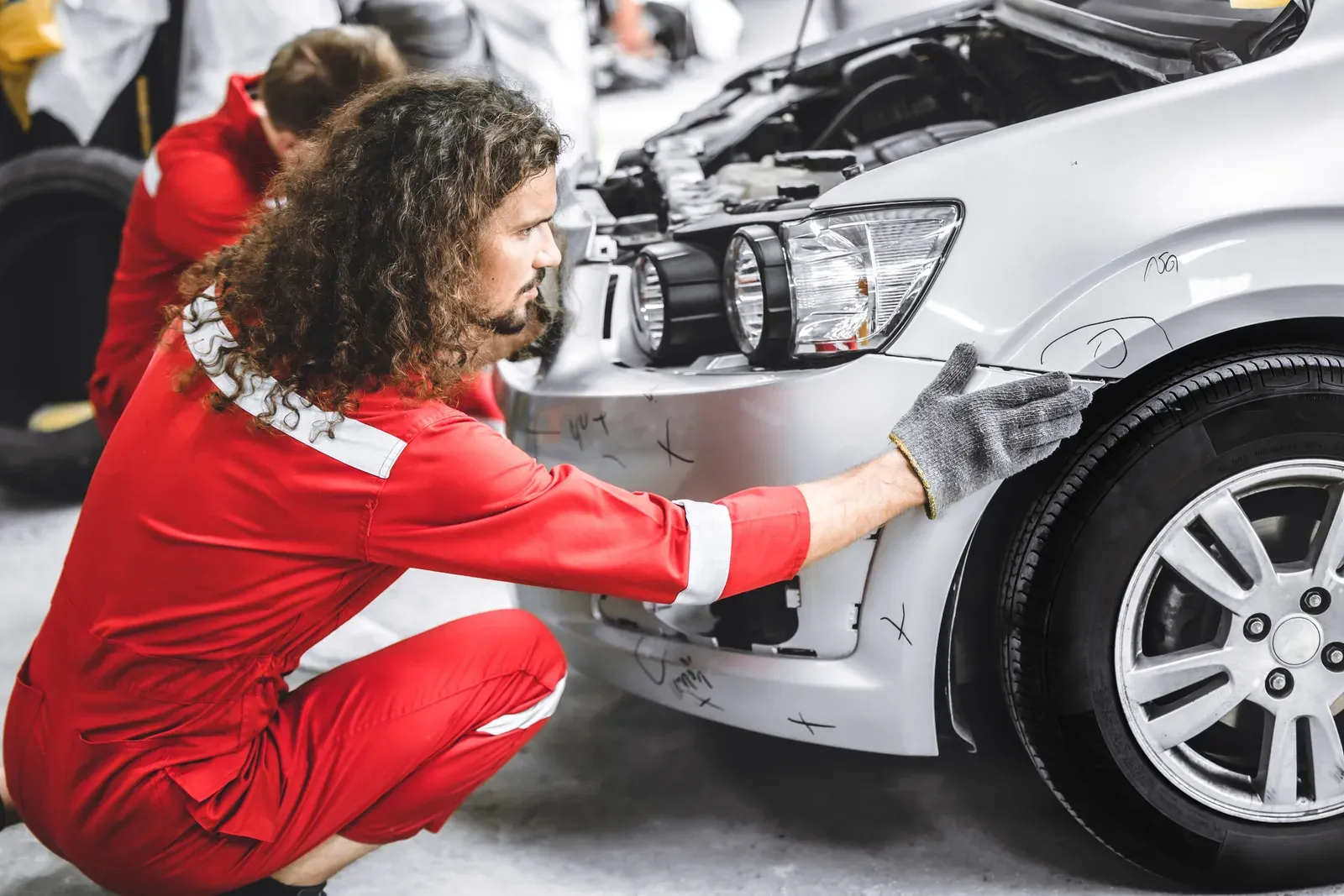
A photo shows the outside of a collision, and the outside is the cheap part. Our estimates work in the opposite order: the bumper cover, liners, lamps, and trim come off first, everything behind them gets photographed, and only then does the number become final. On any hit with highway energy in it we measure the structure, because three millimetres of rail movement is the difference between a cosmetic repair and a structural one — and because your insurance company should be looking at documented damage, not a guess that grows in week two.
From there the repair follows the manufacturer’s data, not habit. Metal gets repaired where it can be brought back properly and replaced where it cannot; we push for OEM parts anywhere the repair touches a safety system, and we put the reasoning in writing on the estimate. Colour is mixed to your code, sprayed out, corrected against the panel it has to sit beside, and blended into the neighbours so the repair has no edge to find in summer light. Before you make the trip back down the 407, the car gets a final inspection and a road test on our streets, not yours.
- Damaged area disassembled and photographed before the estimate is final
- Structure measured whenever the hit carried highway energy
- OEM parts requested in writing where safety systems are involved
- Final inspection and road test before pickup is booked
The claim moves while the car is still in Halton
Ontario pays for collision damage through DCPD: if you were not at fault, in whole or in part, your own insurance company covers your vehicle, with fault split under the province’s Fault Determination Rules — 0, 25, 50, 75, or 100 percent. Report to police or a Collision Reporting Centre when anyone is hurt or the combined damage looks likely to pass $5,000, and tell your insurance company promptly either way; the standard Ontario policy expects notice within about seven days. And whatever shop an adjuster recommends, the recommendation is all it is — the choice belongs to you under Ontario law.
Send your claim number with the photos and the file starts here before the car does. The owner opens the claim, meets the adjuster’s questions with teardown photographs, and books your rental through your coverage so it begins the moment you hand over the keys — which matters when home is 38 kilometres away. Hours are Monday to Saturday, 8 AM to 7 PM, Sundays by appointment; the number is (647) 594-3401.