Front bumpers meet curb stops, rear bumpers meet everything else
Park nose-in along the Wexford Heights strip often enough and the pattern writes itself. Concrete curb stops sit exactly at the height of a modern front valance, so the front bumper collects its damage from below — gouged undersides, cracked lower grilles, tow-hook covers popped and lost. The rear bumper faces the opposite career: it is the part pointed at the plaza lane during every blind reverse, the part that meets the pole nobody saw at Parkway Mall, and the part a following driver taps when a gap on Lawrence closes faster than expected.
The highway version is quieter and worse. Creep-and-surge through the 401 collectors around Warden produces the classic no-big-deal tap — both drivers glance, shrug, and merge on. But bumper systems are built to sacrifice the layer you cannot see: the cover flexes back into shape while the energy-absorbing structure behind it stays crushed. A cover that sits a few millimetres proud at one corner, or a tailgate gap that changed, is the tell. That hidden layer is exactly why we refuse to price a bumper from the outside of the car.
Behind the plastic: the parts that actually cost money
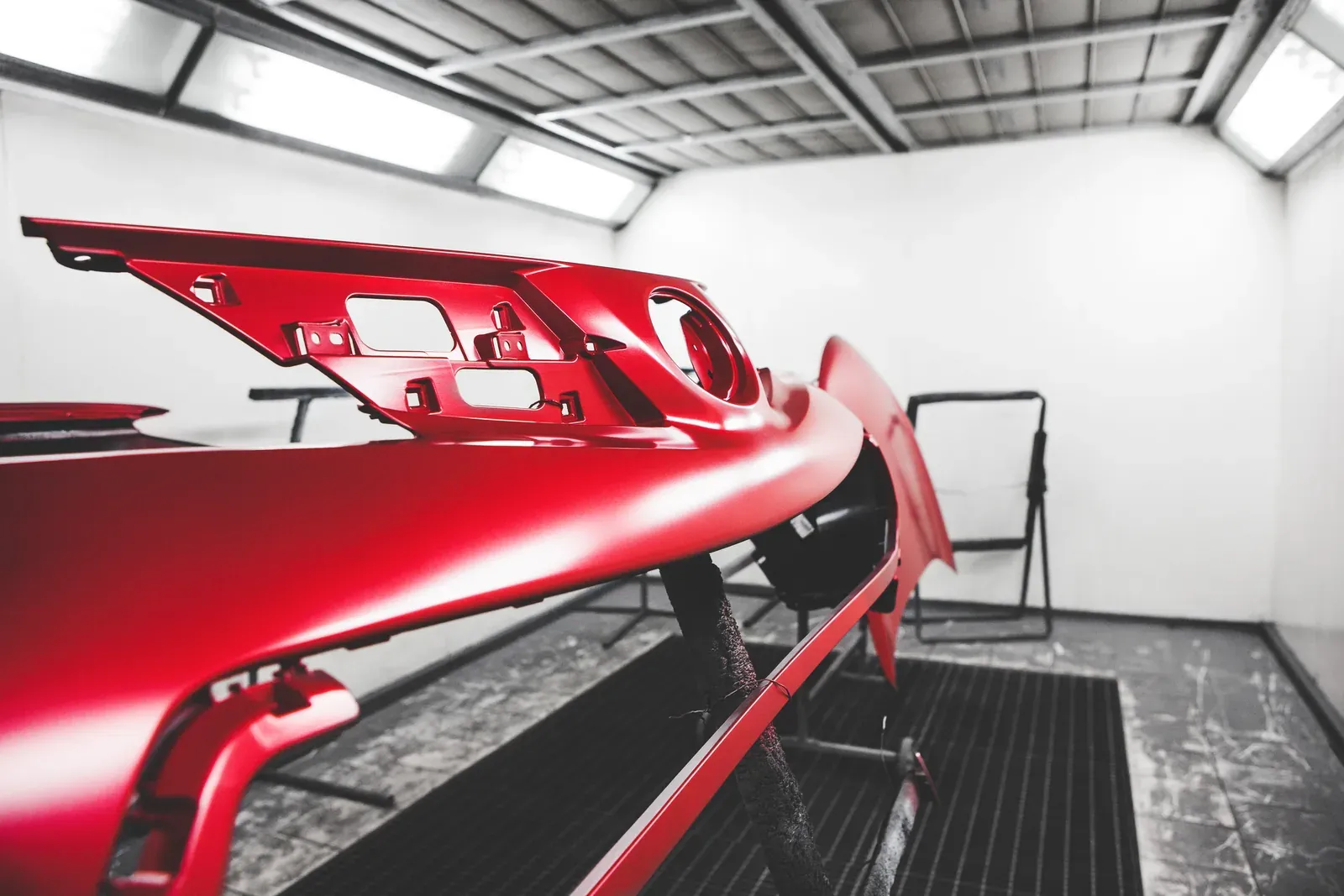
A bumper cover is a painted skin over working equipment — a foam or crush absorber tuned to the vehicle, mounting brackets that hold the geometry, and on most cars now, ultrasonic parking eyes and sometimes radar aimed through the fascia. Our estimates start with the cover off and the layer beneath photographed. If the absorber is intact and the damage is honest cosmetic plastic — scuffs, gouges, a short crack away from the mounting tabs — repair wins: the plastic is welded or bonded, refinished with flex additive so it survives a January cold snap, and the cost lands well under a new part.
Replacement earns its keep when tabs have snapped, the plastic has torn at a corner, or a crease runs through a contour line that no repair will ever hold flush. Sensors raise the standard either way: each one is removed before refinishing, reseated to the manufacturer’s procedure afterward, and verified working before pickup — a sensor sitting slightly off-angle will chirp with total confidence while measuring the wrong distance. The refinish is blended into the adjacent panels and carries the same lifetime paint warranty as every job in the shop.
- Cover removed and the absorber, brackets, and sensors inspected first
- Plastic repair chosen when tabs and structure are intact — priced well under replacement
- Flex additive in the refinish so cold weather cannot crack it
- Sensors reseated to procedure and verified before the car leaves
A fast answer, then a short visit
Bumper jobs are where photo pricing shines. Three pictures — straight on, from the damaged corner, and one close-up — usually tell us which side of the repair-or-replace line you are on, and the written number reaches you before any commitment does. Because many Wexford bumper repairs price near a typical deductible, we set the figure beside your coverage and say plainly whether opening a claim buys you anything. If the bumper is one piece of a collision file, it folds into the claim we are already running, supplements and all.
With the answer settled in advance, the visit stays brief: cover, brackets, and mixed paint staged before arrival, most jobs handed back within a few days, and the drive from Lawrence and Warden about 18 to 26 minutes via the 401 to Keele. The doors are open Monday through Saturday from 8 AM to 7 PM, Sunday drop-offs by appointment, and (647) 594-3401 rings through to the owner, who wrote your estimate and can talk it through.