Ramps, pillars, and the daily grind of Bloor
This neighbourhood is engineered to collect bumper damage. Every tower between Islington and Kipling stations funnels its cars down helical ramps with unforgiving curbs, and the corner of a bumper cover is always the first thing to find the wall. Surface streets add the traffic version: Bloor and Dundas run stop-and-go through the whole City Centre stretch, the rebuilt Six Points signals stack cars in new places, and the tap-from-behind at a light is a weekly event somewhere between Montgomery’s Inn and the Kingsway shops.
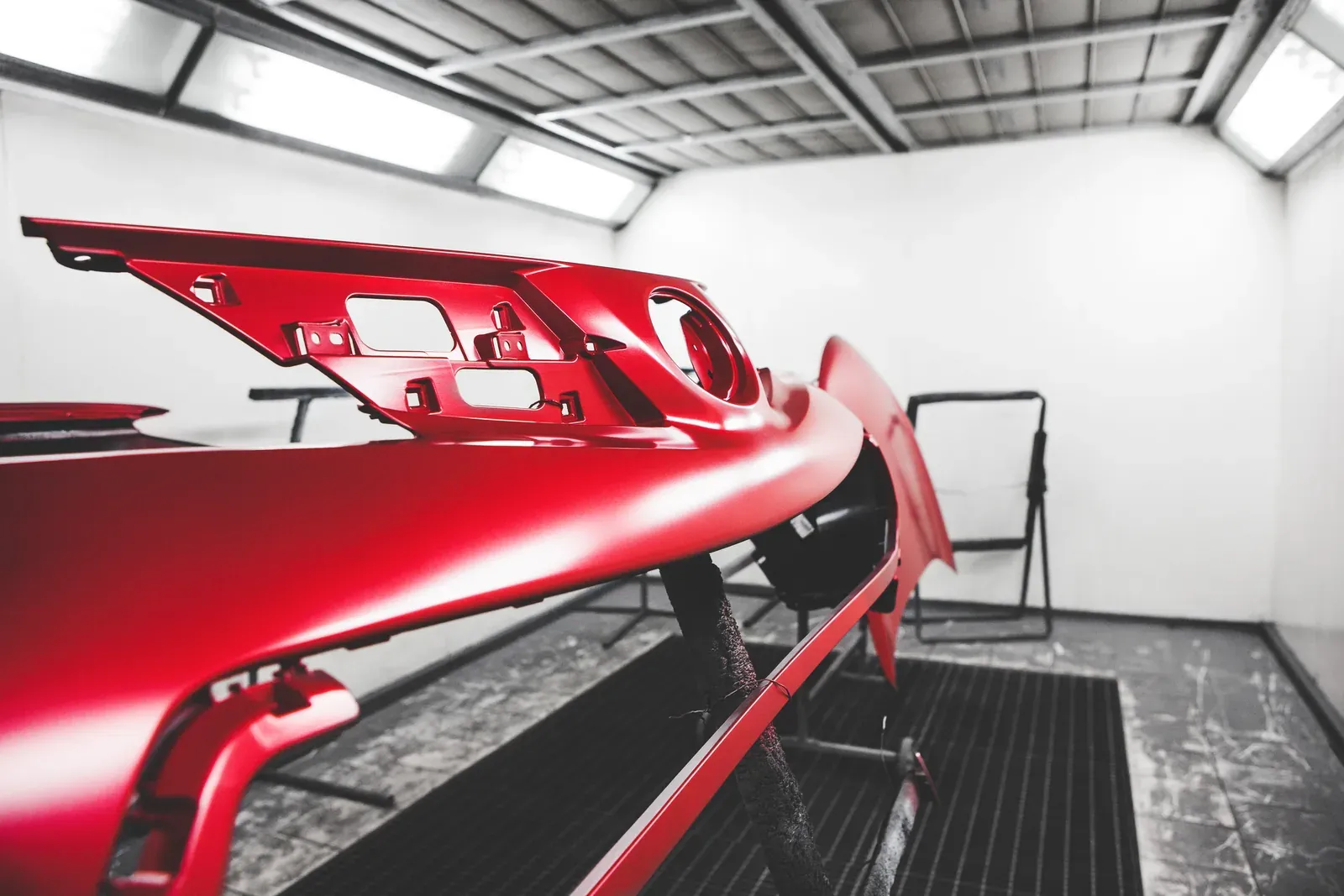
A modern bumper is not the chrome bar its name remembers. It is a painted plastic cover over a foam absorber and a metal reinforcement beam — and increasingly a mounting rack for parking sensors, radar, and camera hardware. That construction is why the outside of a bumper is a poor witness to what happened to it. A scuffed corner from a ramp wall may be purely cosmetic; a modest-looking flat-spot from a stoplight tap can hide a crushed absorber and cracked tabs. The cover has to come off before anyone can say which.
Repair, replace, and the electronics in between
When the cover itself is the casualty, the decision is condition, not habit. Scrapes, scuffs, and modest cracks in a cover that still holds its shape repair well: plastic welded where needed, refinished, and blended so the corner matches the fenders beside it. Covers that are torn through, shattered at the mounting points, or deformed past their memory get replaced — a repaired cover that no longer sits flush announces itself down every parking row. Either way the absorber and reinforcement behind it are inspected, because those parts do the actual safety work.
Sensor-equipped bumpers add a step people skip at their peril. Parking sensors want the correct grommets and seating depth; radar behind the cover cares about paint thickness and bracket position; and a sensor that beeps is not proof of a sensor that reads correctly. We restore the hardware to its factory mounting and confirm function before the car leaves. Paint gets the standard treatment — colour to code, corrected to your panel, blended, and covered for life — because a colour-mismatched bumper is the most visible bad repair in the entire trade.
- Cover off first — the absorber and beam behind it tell the real story
- Plastic repair and refinish where the cover’s shape survived
- Replacement when tabs, tears, or deformation rule repair out
- Sensors and brackets re-seated to factory position and verified
Small job, same standards, easy logistics
Bumper work is where photo estimates shine, because the visible damage narrows the range fast and the teardown either confirms it or turns up the absorber. Send three pictures — the corner, the close-up, the whole end of the car — and a written number comes back quickly. Many Islington bumper jobs stay out of insurance entirely once the price sits next to a deductible; when a claim does make sense, often because the damage came from a stoplight tap that was not your fault, DCPD puts it through your own insurance company and we run the file.
The drive is the easy part: Islington Avenue north from Bloor to the 401, two exits east, off at Keele, and we are just south of Sheppard — about 16 to 25 minutes. Drop-offs work Monday to Saturday, 8 AM to 7 PM, with Sundays by appointment for anyone whose week does not bend. If the cover is dragging or a corner is hanging loose after a garage argument, tape it for the trip or call (647) 594-3401 and we will sort out getting the car here. Estimates and claim updates come straight from the shop, not a call centre.