The first things that matter after a side impact
Check yourself before the car. Side hits fire curtain airbags and throw tempered glass everywhere, and the struck door may refuse to open — climbing out the passenger side is normal and fine. If anyone is hurt, call 911 and let paramedics make the decisions; an injury also makes reporting the collision mandatory.
Then document the intersection itself, not only the vehicles. Which direction each car came from, where the signal or stop sign stood, and where everything came to rest is what fault gets reconstructed from — at a busy corner like Keele and Finch, that context is everything. Photograph the whole scene from several steps back before a tow truck rearranges it.
- Photograph both vehicles from four corners where they stopped
- Photograph the traffic control — signal, sign, or uncontrolled corner
- Note which door, pillar, or wheel took the hit
- Collect witness contacts; intersection disputes turn on them constantly
- Note whether side airbags deployed, and tell the shop if they did
How fault and coverage work in Ontario
Ontario assigns fault under the Fault Determination Rules, in steps of 0, 25, 50, 75, or 100 per cent, and in an intersection the split usually follows right of way. The rules cover most crash patterns explicitly, which is why two drivers with opposite stories can still get a quick determination.
Payment follows the split through DCPD: your own insurance company pays your vehicle damage to the extent you were not at fault, and your collision coverage — with its deductible — covers any at-fault share, if you carry it. There is no waiting on the other driver’s insurance company to accept anything, which is the practical advantage of Ontario’s system.
Why side impacts are a structural repair
A door offers very little crush distance. A side hit sends load straight into the B-pillar, the rocker, and the floor structure, and modern vehicles put their strongest steels exactly there to keep the cabin intact. Those materials come with strict manufacturer rules about what may be heated, pulled, straightened, or only replaced.
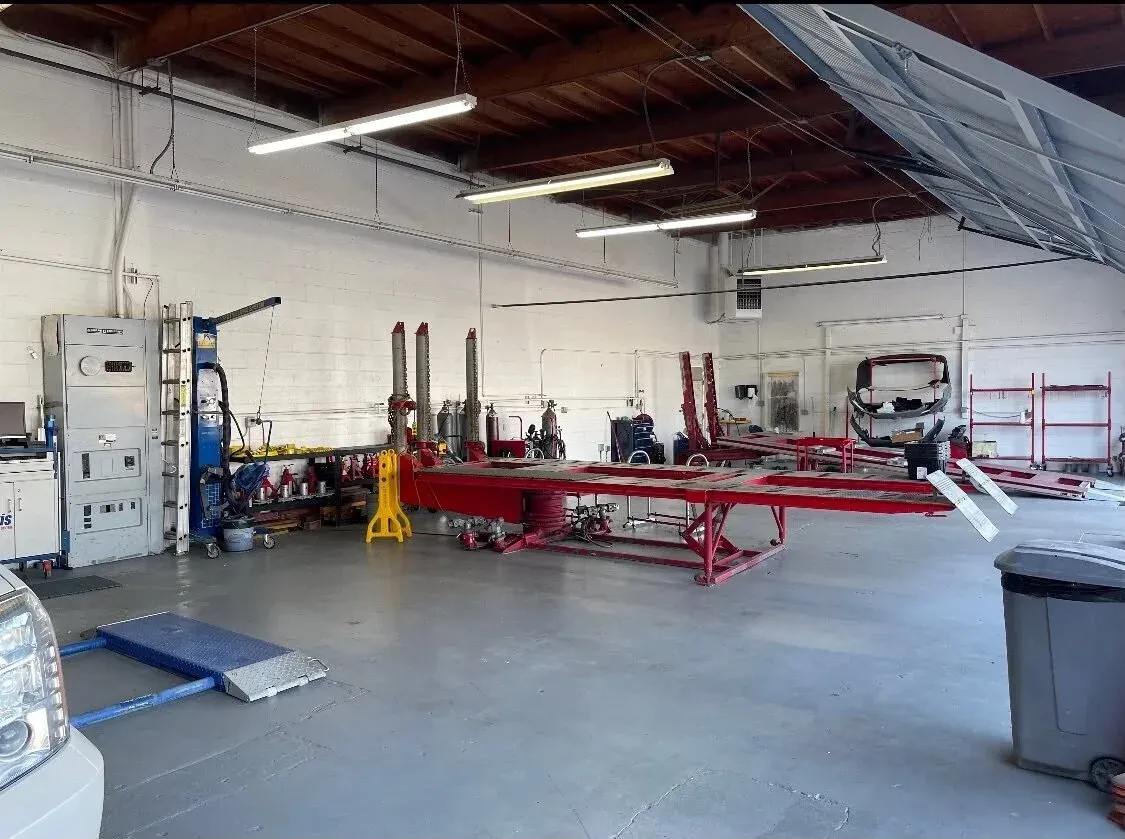
That is why this repair begins on a measuring system rather than in a paint booth. The body is compared against factory dimensions, the numbers are recorded before and after, and the documented procedures for each panel are followed — including the panels the manufacturer says must never be repaired, only replaced.
- Laser measuring against factory specification, recorded before and after
- Manufacturer procedures pulled for high-strength steel and aluminum
- Door skins, intrusion beams, and hinges checked, not just the outer panel
- Deployed restraint components replaced, never reset
- Doors, glass travel, and seals refitted so wind noise never appears
What to do with the car now
If it drives, bring it by — opening and closing the doors, sighting down the side in raking light, and checking the rocker underneath tells us more in ten minutes than a folder of photos. If it does not drive, we help arrange the tow into North York and take it straight off the flatbed.
Structural files live on documentation, and we build it: photographed teardown, measurement printouts, and the manufacturer procedure sheets that go to the adjuster with the estimate. Call (647) 594-3401 to start, or send photos for a written estimate the same day.