Yonge & Steeles, Yonge & Finch, and everything between
Newtonbrook is bracketed by two intersections that move staggering volumes of traffic, and the kilometre and a half of Yonge between them supplies a steady share of the neighbourhood’s collision work. At Steeles, the pattern is left-turn strikes — long queues into Centerpoint Mall and across the boundary line, drivers accepting gaps that close faster than expected. At Finch, it is the shunt: buses, kiss-and-ride traffic, and commuters merging around the terminal produce rear-end hits at 20 km/h that fold bumper covers and crack what sits behind them. Between the two, every plaza entrance is a mid-block turn across through-traffic, and Newtonbrook Plaza’s driveway has seen its share of clipped corners.
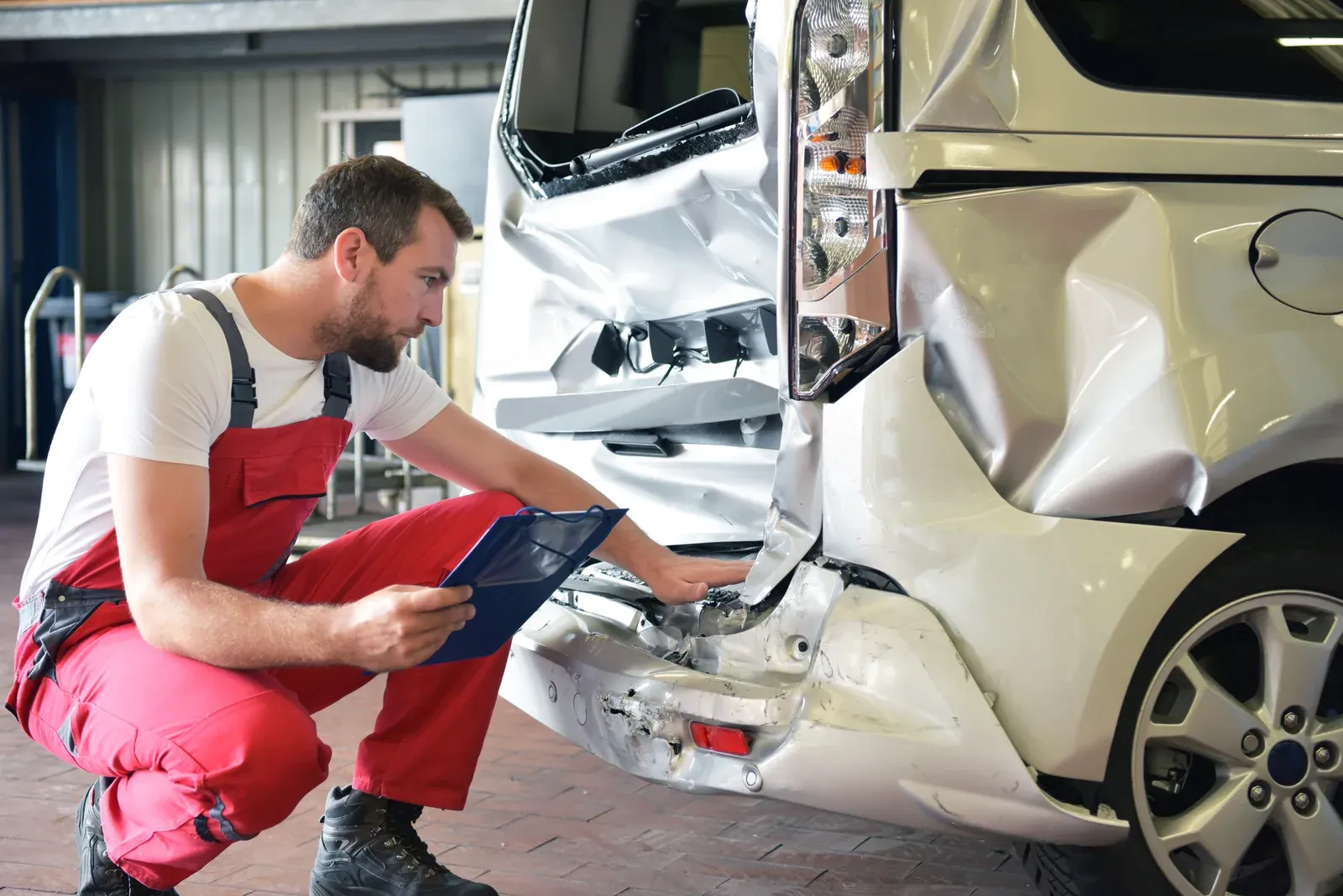
Finch Ave contributes the harder hits. It is the crosstown route for half of north Toronto, and the light-to-light sprints between Bathurst and Bayview end badly often enough — a stack-up at Cummer, a corner caught turning out of a side street like Hilda or Pemberton against traffic that arrived quicker than it looked. Whatever the speed, the estimate does not get written from the sidewalk. The damaged area comes apart first, because a cover that merely looks scuffed can be hiding a crushed absorber, cracked brackets, or a rail that moved a few millimetres — and those millimetres are where the real cost lives.
From the Yonge corridor to our door without touching a highway
A drivable car reaches us in one move: west along Finch Ave, down Keele, done — about 12–18 minutes and not a single on-ramp, which matters when you are nursing a taped-up front end. From the Steeles end of the neighbourhood, Steeles west to Keele works just as well. If the car should not be driven — a wheel sitting wrong, coolant on the pavement, an airbag out — do not test it on Finch. Call us instead.
Under Ontario’s towing rules, you decide where the tow truck takes your vehicle, the operator must be provincially certified, and the invoice must be itemized. Tell the driver the destination is Collision Auto Center in the Keele & Sheppard area, or call us from the scene at (647) 594-3401 and we coordinate the tow ourselves. That single decision keeps the car out of a storage yard, where daily fees accumulate against your claim while nothing gets repaired.
One estimator, one file, start to finish
The owner looks at the car, writes the number, and owns the file until you have the keys back — there is no counter to stand at and no rotation of service advisors to re-explain yourself to. When you were not at fault, in whole or in part, Ontario’s DCPD system means your own insurance company pays for the vehicle damage, with the percentages set by the provincial Fault Determination Rules. We open that claim, walk the adjuster through the teardown photos, and file supplements directly when hidden damage surfaces, so approvals never stall the repair while you play messenger.
The work itself is done to a simple standard: structure measured against factory specification where the hit went deep, OEM parts requested where safety is on the line, colour matched to your code and blended into the neighbouring panels. The paint and refinish work is warranted for as long as you own the car, and replacement parts carry a parts-and-installation warranty. Updates come Monday through Saturday from 8 AM to 7 PM.
- Teardown before the final estimate — photographed and shared with the adjuster
- DCPD claim opened and managed from our side
- OEM parts requested where safety is involved
- Lifetime warranty on paint; parts-and-installation warranty on replacements