What a century-old neighbourhood does to a modern finish
The Junction’s housing went up for railway workers and factory hands, long before anyone imagined a two-car household — so today’s cars squeeze into laneway garages built for buggies, onto narrow pad parking, or simply onto the street with a permit. Each option leaves its mark. Laneway brick takes paint off door edges and mirror caps one millimetre at a time. Street parking exposes the finish to twelve months of weather and the occasional stranger’s bumper. Pad parking off a mutual drive means threading a gap that was generous in 1915 and is a discipline now.
Layer the environment on top. Keele, Dundas W, and St. Clair get salted hard from December through March, and salt spray dulls lower panels and creeps into every chip. Truck traffic to the industrial pockets around Junction Rd and the Triangle kicks up grit that sandblasts hoods and windshield pillars. Summer sun then bakes whatever the winter started. By year five or six, a Junction car’s paint is measurably different from the day it left the factory — which is precisely the problem when one panel suddenly has to be repainted and match the other eleven.
Matching the car in front of us, not the formula on file
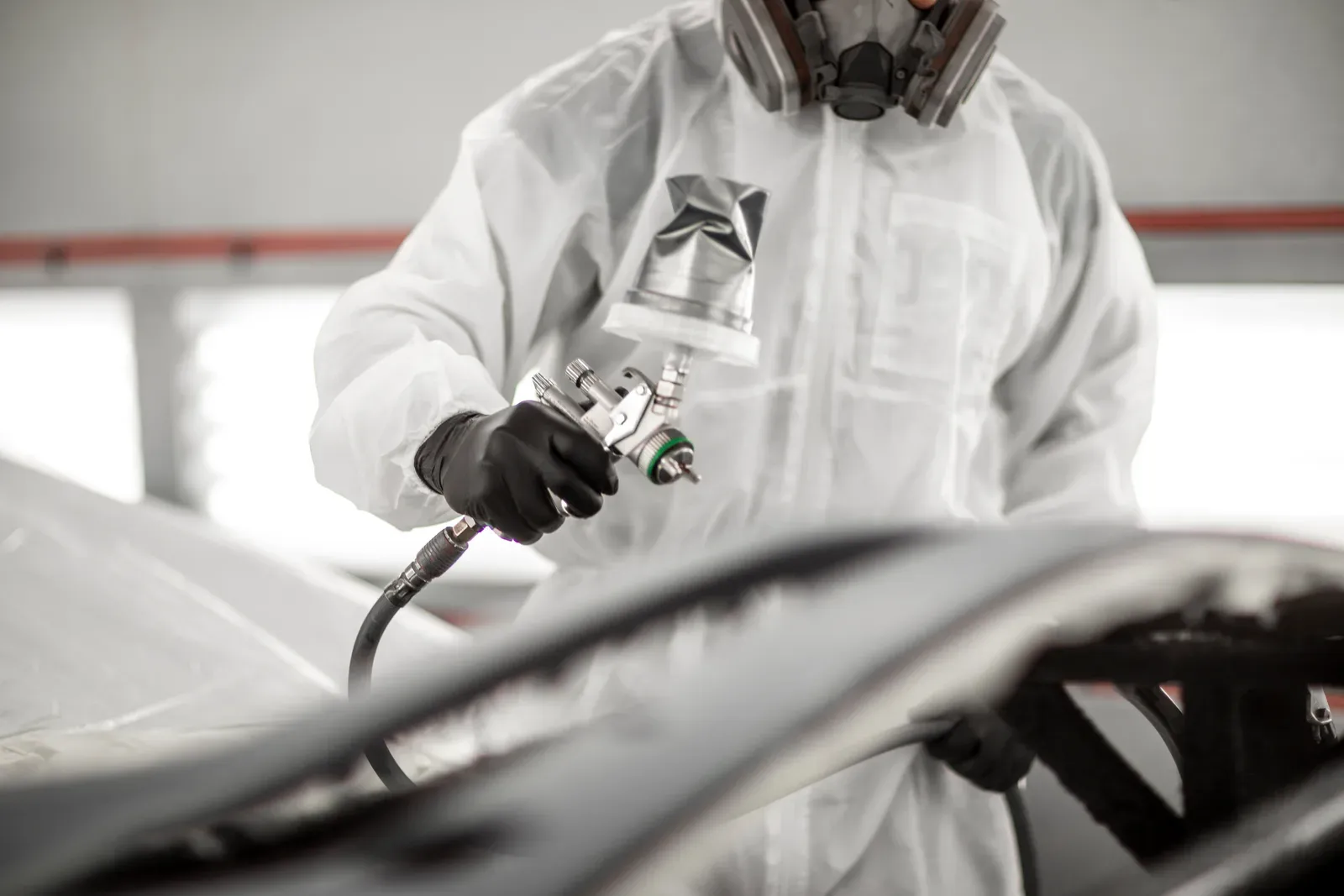
Any shop can order paint by your code. The code, though, describes the car as it was new — and yours has spent years weathering on Pacific Ave or under the sun in a Stockyards lot. Spray the factory formula straight and the fresh panel will read slightly wrong against its neighbours every time low light rakes across it. Our sequence closes that gap: start from the code, tune the mix against your actual panels, spray a test card, and check it under corrected light before any colour touches the car. Metallics and pearls get judged from several angles, because those finishes shift as you walk around them.
The finishing move is the blend. New colour never stops dead at a panel edge, where any difference draws itself a line; it is carried into the adjacent panels so the transition happens across a surface too gradual for the eye to catch. That is the difference between paint work you have to explain and paint work nobody ever notices. All of it — colour, clear, blend — is covered by our lifetime warranty on refinishing for as long as the car is yours.
- Colour tuned against your weathered panels, not sprayed blind from the code
- Test card checked under corrected light before the car is painted
- Metallic and pearl finishes verified from multiple angles
- Blended transitions with a lifetime refinish warranty
Claim it or pay for it — the honest arithmetic first
Paint jobs are where a claim can quietly stop being worth it, so we put the numbers in front of you before anything is decided. A scraped door from the Dundas W parking shuffle that prices near your deductible is usually not worth claiming — the claim gains you nothing. A keyed panel is vandalism, which typically runs through comprehensive coverage — subject to your policy, the deductible, and the insurance company’s decision — and is often worth putting through. An unidentified driver who raked your parked car and left generally puts the repair under your own collision coverage, and reporting it as a hit-and-run protects your position. Photos to (647) 594-3401 get you the price both ways, plainly.
Logistics stay small. The drive up Keele is 14 to 22 minutes; the shop is open 8 AM to 7 PM Monday through Saturday, Sundays by appointment; and single-panel refinish work is measured in days, most of that booth and cure time. The owner keeps you posted along the way, and the car comes back with its colour whole and its history invisible.