Oakville driveways are full of paint that punishes shortcuts
The vehicles parked from Morrison Road to Glen Abbey skew toward exactly the finishes that expose a lazy refinish: three-stage pearl whites, deep German metallics, tinted clears that shift colour with the angle of the sun. Spraying those straight from the code is how a repaired fender ends up announcing itself in the first hour of daylight — the code describes the paint as it left the factory, not the panel as it looks after six Ontario summers. So the code is only our starting point. The mix gets sprayed on a test card, held against your actual panel under corrected light, adjusted, and sprayed again until the card disappears against the car.
The second half of an invisible repair is the blend. Paint is never stopped at a panel edge where the eye can compare new against old along a straight line; it is carried into the neighbouring panels so the transition falls where nobody can find it. On a pearl that means laying the mid-coat in its own passes and checking the flop twice. It is slower than painting one panel to code, and it is the entire difference between a repair you know about and a repair you can find.
Weathered by the QEW, damaged in the lots and lanes
An Oakville commuter car takes highway fire five days a week — QEW grit on the leading edges, salt from December to April, humid lakeshore air keeping that salt active on cars parked near Bronte Harbour and the downtown streets. All of that ages a finish, and the aging is precisely what a claim refinish has to blend into: a repaired fender painted to the factory code alone will glow against six winters of weathered paint beside it.
The damage itself comes from contact. Lakeshore Road East and Kerr Village run on centimetre-tight parallel parking that trades scuffs nobody confesses to; the GO lots produce the overnight scrape with no note; a keyed panel outside a downtown restaurant is vandalism with a comprehensive-claim question attached. Coverage is never automatic — eligibility, your policy, repair approval, deductibles, and the insurance company’s decision all apply — which is why every Oakville paint file starts with photos and a written number held against the deductible.
- Sideswipe scars and parking scrapes from Lakeshore and Kerr Village blended out
- Keyed panels documented and priced for the comprehensive-claim decision
- Hit-and-run damage refinished once the police report is in hand
- Colour matched to the panel as it exists today, not the factory card
Built for one trip down the 407, warranted for life
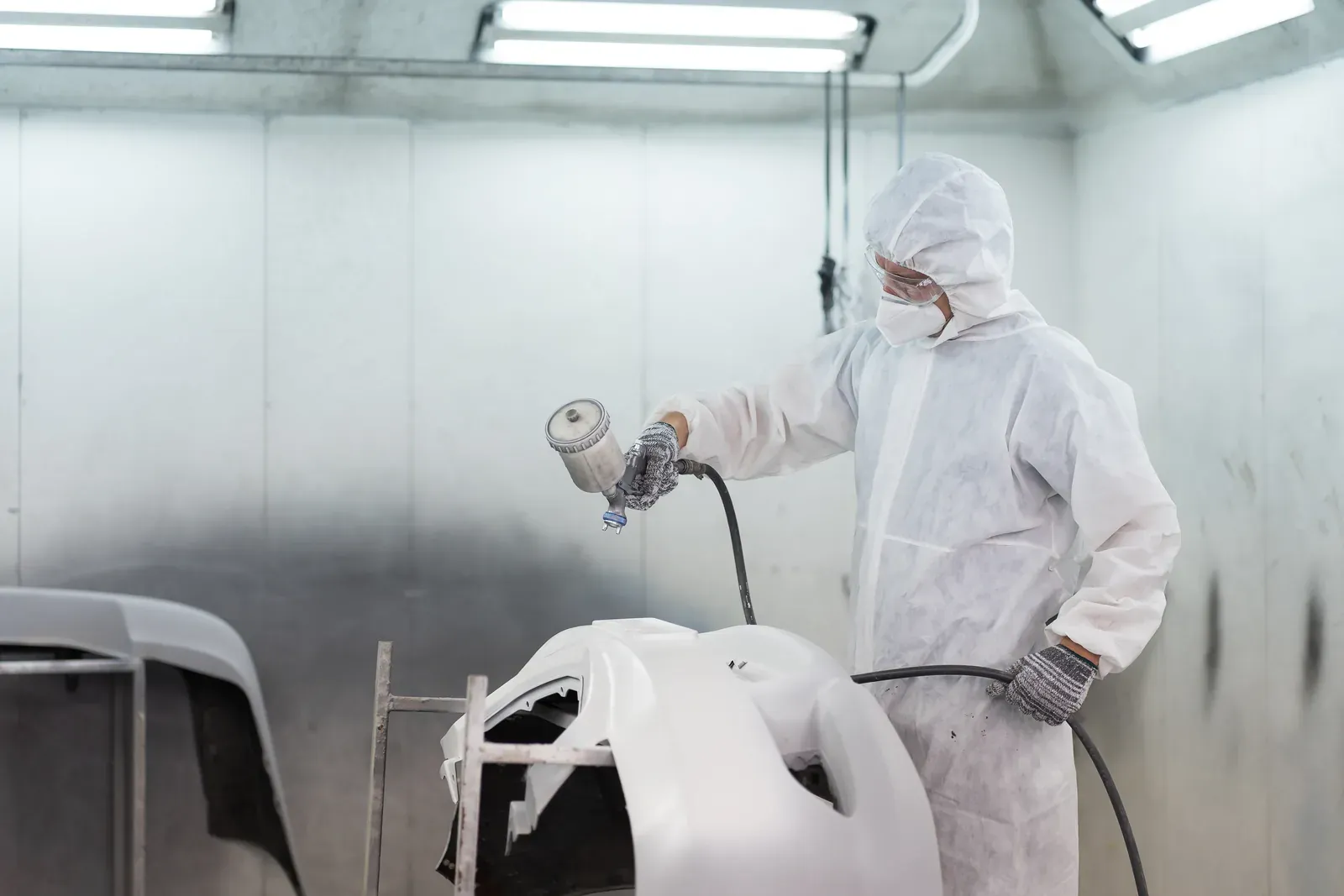
Because Oakville is a real drive from us, paint work starts with photographs: text the damage and the panel around it to (647) 594-3401 and a written number comes back before you commit an hour to the QEW. When the car arrives, the panel is stripped of trim, repaired properly underneath — dents worked, damage ground back to sound material, nothing buried under filler that should have been metal-finished — then primed, sealed, and sprayed in the booth. Cure time is part of the schedule we quote, not a surprise added at the end.
Every refinish leaves with a lifetime warranty in writing, which travels the 38 kilometres just fine: if the paint work ever fails while you own the car, the phone call is the same from Bronte as from across Keele Street. If the paint damage came from vandalism or a parking-lot scrape someone else left behind, we can walk you through whether a comprehensive or DCPD claim makes sense against your deductible before you decide to involve your insurance company at all.