Concrete is hard on paint, and this neighbourhood is made of it
Most Islington–City Centre cars sleep in structure parking, and structure parking is an abrasive habitat. The yellow-striped pillars on the P-levels leave their mark on doors and quarters; ramp walls shave bumper corners a millimetre at a time; and the tight column grids around the elevator cores produce long, shallow scrapes that run across two panels. The first question with any of it is whether the mark is transfer sitting on top of your clear coat or a cut through it. Transfer often polishes off. Anything your fingernail catches has gone through the colour, and that panel needs paint, not compound.
You do not have to guess which one you have. Take two or three close-up photos in decent light — the garage’s fluorescents will do if you angle away from the glare — and send them over. We will tell you which side of the line the damage falls on and what each answer costs, in writing, before the car leaves the building. Half of the garage scrapes we are sent turn out to need one refinished panel and a blend, not the multi-panel job the owner feared — and whether that number clears your collision deductible by enough to justify a claim is exactly the comparison we lay out with it.
Matching paint on cars from both sides of the subway line
The towers feed us late-model finishes — pearls, tri-coats, and the greys and whites that dominate condo garages — where the difficulty is layering. A pearl mid-coat applied a pass heavier than the factory’s shifts the colour at certain angles, so the match is proven on a spray-out card against your panel before the gun ever points at the car. The Kingsway feeds us the opposite problem: paint the factory mixed fifteen or twenty years ago, aged by sun, sap, and winters at the curb until the code on the door jamb describes a colour the car no longer wears.
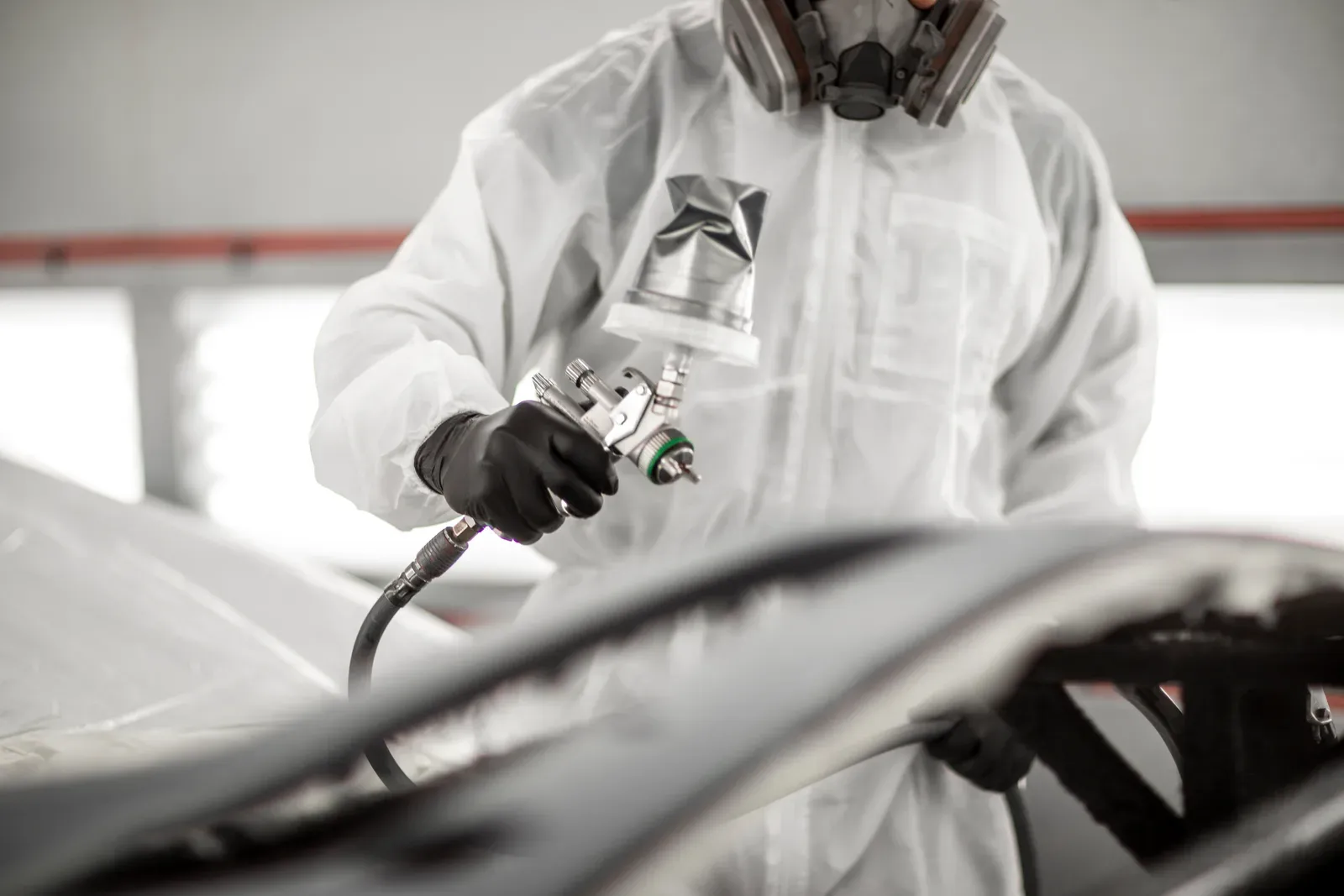
The method covers both. The code is the starting recipe; the panel as it exists today is the target. We tint until the sprayed card disappears against the car under corrected light, then carry the colour into the adjacent panels so the transition lands where no eye can find it. A hard paint edge at a panel gap is what makes a repair visible from across Tom Riley Park — the blend is what makes it vanish. Every refinish leaves with a lifetime warranty in writing: if the paint fails while you own the car, we make it right.
The trip, the timing, and what it costs to find out
From Bloor and Islington the shop is one road away — Islington Avenue north to the 401, off at Keele, about 16 to 25 minutes outside of rush hour. Photo estimates cost nothing and commit you to nothing, and for refinish work they are unusually accurate, because paint damage hides less than collision damage does. When you do book, the car’s stay depends on cure times as much as labour; we will give you the honest window up front rather than a cheerful guess.
Two practical notes for this neighbourhood. First, winter is the enemy of open scrapes — salt spray finds bare metal fast, and a scrape painted in November costs what it costs, while the same scrape ignored until April often brings rust repair with it. Second, if the paint work is part of an insurance repair, the refinish is negotiated within the claim like everything else, and we handle that conversation with your insurance company directly. Hours are Monday to Saturday, 8 AM to 7 PM, Sundays by appointment.